
DbcultAccessing Vault...
Director's Spotlight
Senior Film Conservator
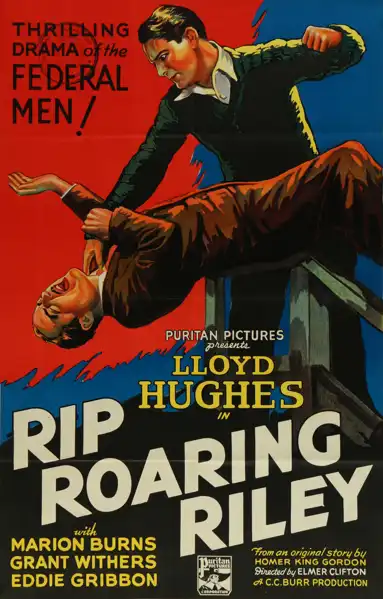
Director's Spotlight: United States
A Deep Dive into the 1935 Vision of Elmer Clifton
Peeling back the layers of Elmer Clifton's Rip Roaring Riley exposes the technical innovation that Elmer Clifton introduced to the Action format. Driven by an uncompromising commitment to Action excellence, it stands as the definitive 1935 statement on Action identity.
In Rip Roaring Riley, Elmer Clifton pushes the boundaries of conventional narrative. The film's unique approach to its subject matter has sparked endless debates and interpretations among cinephiles and critics alike.
To fully appreciate Rip Roaring Riley, one must consider the cinematic climate of 1935. During this period, United States was undergoing significant artistic shifts, and Elmer Clifton was at the forefront of this Action movement, often challenging established norms.
| Cinematography | Noir-Inspired |
| Soundtrack | Synth-Heavy |
| Editing | Disjunctive |
| Art Direction | Baroque |
Visualizing the convergence of Elmer Clifton's style and the core Action narrative.
G-Man Ted Riley (Lloyd Hughes ) is ordered to investigate happenings at Diamond Island, where a bogus Major Gray (Grant Withers) is reported engaged in manufacturing a new brand of secret gas for his own purposes. Riley blows up his motor boat just off the island and is picked up by Gray's men. On the island he discovers chemist Professor Baker (John Cowell) and his daughter, Anne (Marion Burns), are held captive by Major Gray.
Decades after its release, Rip Roaring Riley remains a vital piece of the cinematic puzzle. Its influence can be seen in countless modern works, solidifying Elmer Clifton's status as a master of the craft in United States and beyond.