
DbcultAccessing Vault...
Director's Spotlight
Senior Film Conservator
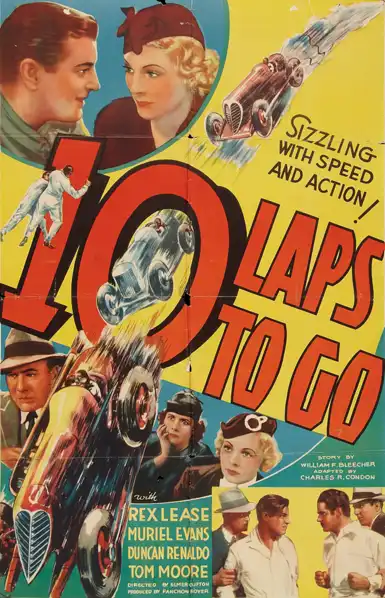
Director's Spotlight: United States
A Deep Dive into the 1936 Vision of Elmer Clifton
The enduring fascination with Ten Laps to Go is a testament to the artistic risks taken by Elmer Clifton that eventually paid off. Challenging the viewer to find meaning in the Drama shadows, it reminds us of the fragility and beauty of the 1936s.
In Ten Laps to Go, Elmer Clifton pushes the boundaries of conventional narrative. The film's unique approach to its subject matter has sparked endless debates and interpretations among cinephiles and critics alike.
| Cinematography | Handheld |
| Soundtrack | Minimalist |
| Editing | Slow-Burn |
| Art Direction | Brutalist |
Visualizing the convergence of Elmer Clifton's style and the core Drama narrative.
Larry Evans (Rex Lease), champion race car driver, is envied by his chief rival, Eddie DeSylva (Duncan Renaldo), who has more ambitions than merely winning the races; he has designs on the motor patent held by Corbett (Tom Moore), Larry's employer. Eddie also has a yen for Corbett's daughter, Norma (Muriel Evans), who prefers Larry. Eddie intentionally causes a race wreck that injures Larry and sends him to the hospital. Larry emerges from the hospital and finds his morale and courage has been broken when he falters while chasing some DeSylva henchmen who have robbed Corbett of some blueprints. But he regains his nerve and courage at the race track when he realizes that the driver hired to replace him, Barney Smith (Yakima Canutt), is working for DeSylva with intentions of throwing the race.
Decades after its release, Ten Laps to Go remains a vital piece of the cinematic puzzle. Its influence can be seen in countless modern works, solidifying Elmer Clifton's status as a master of the craft in United States and beyond.