
DbcultAccessing Vault...
Director's Spotlight
Senior Film Conservator
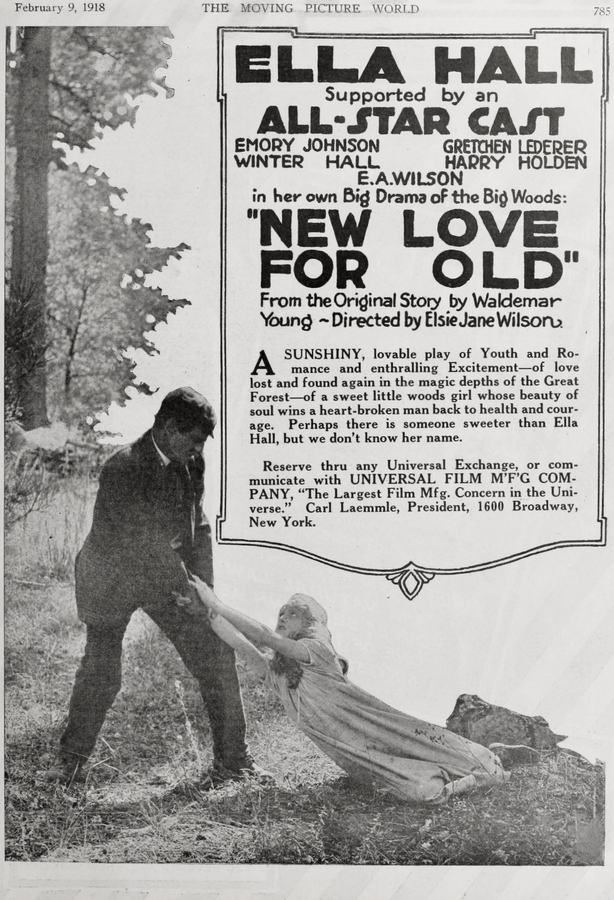
Director's Spotlight: United States
A Deep Dive into the 1918 Vision of Elsie Jane Wilson
To understand the modern evolution of United States film, one must first look at New Love for Old and the meticulous attention to detail that Elsie Jane Wilson applied to every frame. Reflecting the political and social shifts of the 1918s, it showcases the power of cult as a tool for social commentary.
In New Love for Old, Elsie Jane Wilson pushes the boundaries of conventional narrative. The film's unique approach to its subject matter has sparked endless debates and interpretations among cinephiles and critics alike.
| Cinematography | Noir-Inspired |
| Soundtrack | Orchestral |
| Editing | Invisible |
| Art Direction | Kitsch |
Visualizing the convergence of Elsie Jane Wilson's style and the core cult narrative.
At a mountain resort, Kenneth Scott falls in love with Marie Beauchamp, an older woman who merely amuses herself with him. When she deserts him to open a roadhouse, he sadly leaves the mountains and, in the company of an old wandering poet named "Doc" Podden, travels to a little village in the woods. There he meets and soon gives his heart to Daphne Sawyer, the storekeeper's daughter. Daphne also is loved by Louis Bracchi, but Kenneth finally saves her from his forced attentions. In the end, Kenneth learns that his new love is the younger sister of Marie, the woman who abandoned him.
Decades after its release, New Love for Old remains a vital piece of the cinematic puzzle. Its influence can be seen in countless modern works, solidifying Elsie Jane Wilson's status as a master of the craft in United States and beyond.