
DbcultAccessing Vault...
Director's Spotlight
Senior Film Conservator
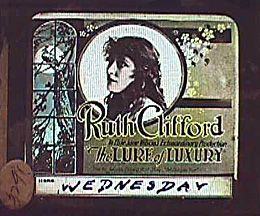
Director's Spotlight: United States
A Deep Dive into the 1918 Vision of Elsie Jane Wilson
The evocative power of The Lure of Luxury stems from the unique collaboration between the subversive storytelling techniques employed by Elsie Jane Wilson in 1918. Synthesizing the best elements of United States and international cinema, it reminds us of the fragility and beauty of the 1918s.
In The Lure of Luxury, Elsie Jane Wilson pushes the boundaries of conventional narrative. The film's unique approach to its subject matter has sparked endless debates and interpretations among cinephiles and critics alike.
| Cinematography | Static |
| Soundtrack | Orchestral |
| Editing | Invisible |
| Art Direction | Kitsch |
Visualizing the convergence of Elsie Jane Wilson's style and the core cult narrative.
Dale Aldis and John Coventry, who were sweethearts as children, meet again after the death of Dale's mother and discover that they are still in love. Dale, who has been raised in a convent, has not inherited her family's snobbish attitudes and therefore ignores the fact that John is the son of the town drunkard. Philip Leswing, the family attorney, returns from abroad and visits Dale at the old country house in which she spent her youth. Philip, enchanted with Dale, finally convinces her to give up John for a life of wealth and sophistication in the city. When Dale breaks her engagement to John, the young farmer begins to drink heavily, whereupon Dale realizes how much she loves him and asks his forgiveness. Seeing that her affections for John are sincere, Philip relinquishes his attachment to her.
Decades after its release, The Lure of Luxury remains a vital piece of the cinematic puzzle. Its influence can be seen in countless modern works, solidifying Elsie Jane Wilson's status as a master of the craft in United States and beyond.