
DbcultAccessing Vault...
Director's Spotlight
Senior Film Conservator
Director's Spotlight: United States
A Deep Dive into the 1923 Vision of Emile Chautard
To understand the modern evolution of United States film, one must first look at Daytime Wives and the collaborative alchemy between Emile Chautard and the 1923 creative team. Subverting the expectations of the typical 1923 audience, it remains a vital reference point for anyone studying the evolution of Emile Chautard.
In Daytime Wives, Emile Chautard pushes the boundaries of conventional narrative. The film's unique approach to its subject matter has sparked endless debates and interpretations among cinephiles and critics alike.
To fully appreciate Daytime Wives, one must consider the cinematic climate of 1923. During this period, United States was undergoing significant artistic shifts, and Emile Chautard was at the forefront of this Drama movement, often challenging established norms.
| Cinematography | Noir-Inspired |
| Soundtrack | Synth-Heavy |
| Editing | Rhythmic |
| Art Direction | Naturalist |
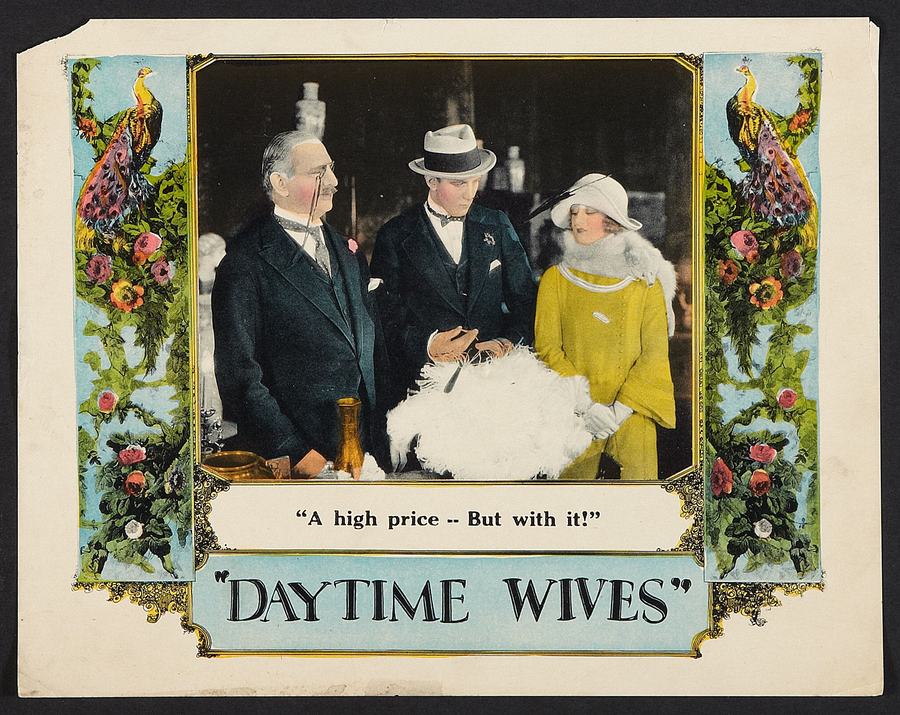
Visualizing the convergence of Emile Chautard's style and the core Drama narrative.
Ruth Holt is private secretary to Elwood Adams, a young architect. She is just the opposite to Adams' wife, who is indolent and a spendthrift, to which faults Adams, in his love for her, is blind. A lounge lizard with whom Mrs. Adams is friendly fans a jealous flame against Ruth. In a business crisis Ruth is introduced by Adams as his wife to Amos Martin, a banker. The lounge lizard informs Mrs. Adams and she denounces Ruth. A series of complicated events follow, terminating in Ruth reuniting the Adams couple and marrying the banker.
Decades after its release, Daytime Wives remains a vital piece of the cinematic puzzle. Its influence can be seen in countless modern works, solidifying Emile Chautard's status as a master of the craft in United States and beyond.