
DbcultAccessing Vault...
Director's Spotlight
Senior Film Conservator
Director's Spotlight: United States
A Deep Dive into the 1924 Vision of Emmett J. Flynn
The artistic breakthrough represented by The Man Who Came Back in 1924 highlights the uncompromising vision of Emmett J. Flynn that defines this Drama masterpiece. In the context of United States's rich cinematic history, it captures a specific kind of cinematic magic that is rarely replicated.
In The Man Who Came Back, Emmett J. Flynn pushes the boundaries of conventional narrative. The film's unique approach to its subject matter has sparked endless debates and interpretations among cinephiles and critics alike.
In this work, Emmett J. Flynn explores the intersection of Drama and United States cultural identity. The meticulous attention to detail suggests a deep-seated commitment to pushing the boundaries of the medium, ensuring that The Man Who Came Back remains a relevant topic of study for Drama enthusiasts.
| Cinematography | Handheld |
| Soundtrack | Diegetic |
| Editing | Elliptical |
| Art Direction | Expressionist |
Visualizing the convergence of Emmett J. Flynn's style and the core Drama narrative.
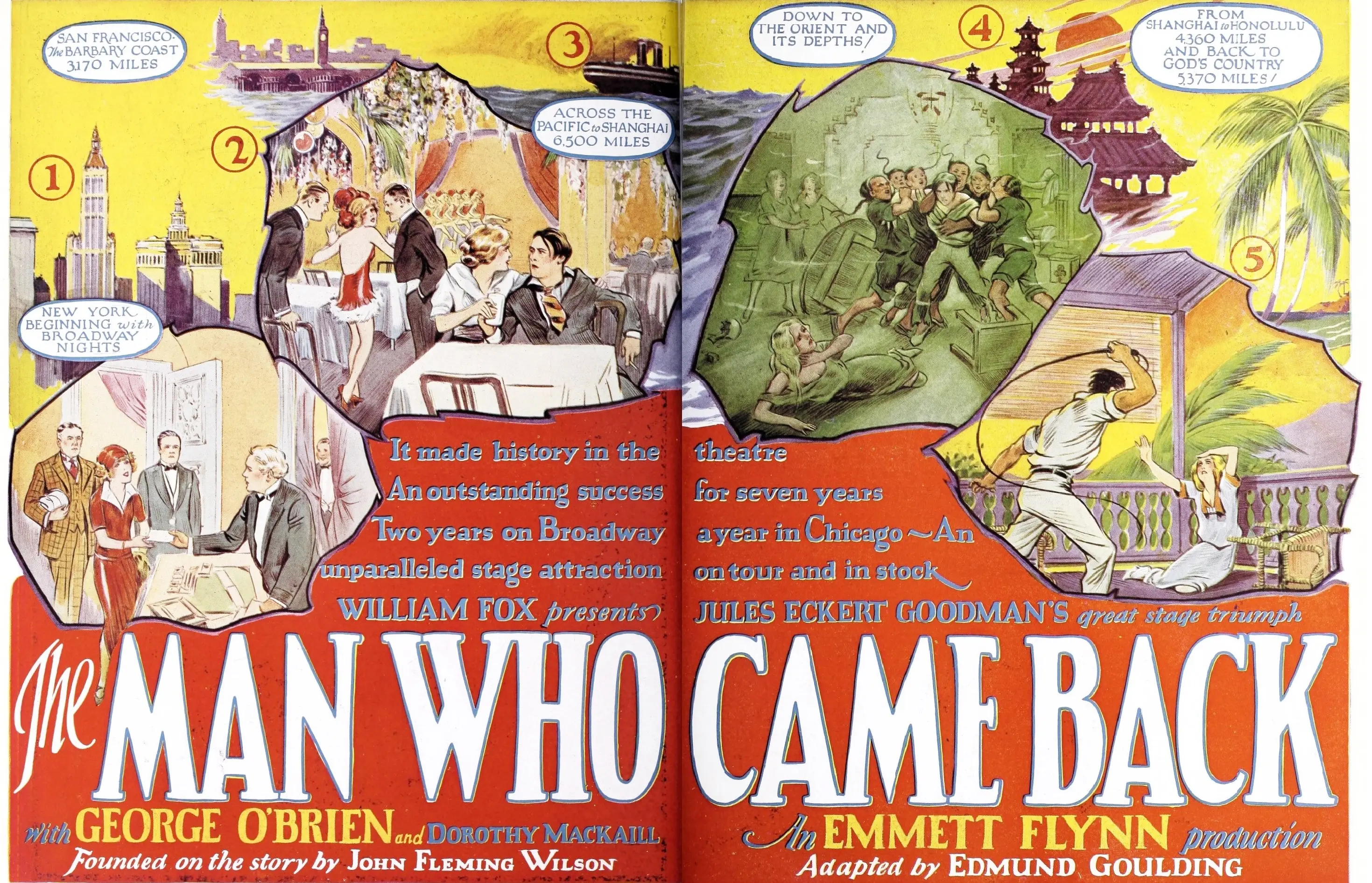
Henry Potter is the irresponsible playboy son of a New York millionaire. Fearing he will disgrace the family name if he stays in New York, the father sends him to San Francisco to work in the family shipyards and, to make a man out of him, he is told he will have to start at the bottom and work his way up. Henry decides this is not a good idea and resents it to the point he will indeed start at the bottom but will work his way down from there, and disgrace the family name in San Francisco. On one of his drinking binges, he meets Marcelle, a cabaret dancer. He tolerates her and she falls in love with him and pleads for him to give up his drinking and carousing. The father sends a company-man out to check on him and he finds Henry an alcoholic and very much in debt. He pays off Henry's debts and then pays a freighter captain $500 to shanghai Henry to Shanghai, where the family name is less well-known. There Henry sinks even lower and frequents the worse dives in the worse sections of the city. He offers to buy a drink for a girl in an opium den and the girl turns out to be Marcelle. But Marcelle has changed a bit since he last saw her, and she is now hooked on drugs and is less inclined to harp on Henry about his drinking and/or carousing. But they decide they truly love each other, and begin the long, uphill fight back to respectability together, with the codicil that if he takes a drink or Marcelle uses a needle, the other is free to leave. Their regeneration path is so good that, a year later, they own a pineapple ranch outside Honolulu and making good. Henry's family, none too approving of Marcelle, shows up and asks him to return to New York where his father is gravely ill. Henry, because he thinks Marcelle needs him more, refuses. Marcell thinks she is holding Henry back from his true destiny, so she lets Henry and his family catch her with a needle in her hand. There is more.
Decades after its release, The Man Who Came Back remains a vital piece of the cinematic puzzle. Its influence can be seen in countless modern works, solidifying Emmett J. Flynn's status as a master of the craft in United States and beyond.