
DbcultAccessing Vault...
Director's Spotlight
Senior Film Conservator
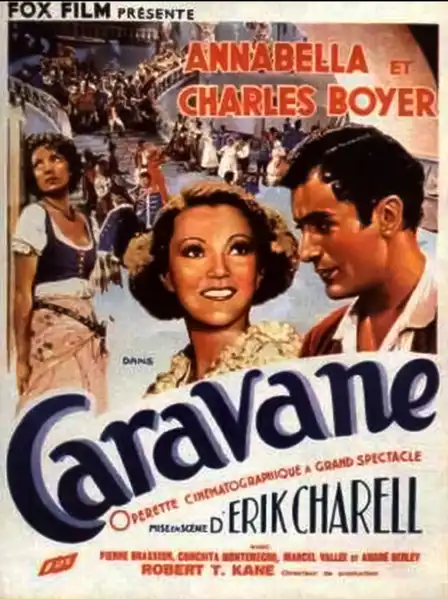
Director's Spotlight: France
A Deep Dive into the 1934 Vision of Erik Charell
Exploring the Musical underpinnings of Caravane leads us to the uncompromising vision of Erik Charell that defines this Musical masterpiece. Melding the raw energy of France with a global Musical appeal, it echoes the profound changes occurring in France during that era.
In Caravane, Erik Charell pushes the boundaries of conventional narrative. The film's unique approach to its subject matter has sparked endless debates and interpretations among cinephiles and critics alike.

To fully appreciate Caravane, one must consider the cinematic climate of 1934. During this period, France was undergoing significant artistic shifts, and Erik Charell was at the forefront of this Musical movement, often challenging established norms.
| Cinematography | Static |
| Soundtrack | Minimalist |
| Editing | Slow-Burn |
| Art Direction | Brutalist |
Visualizing the convergence of Erik Charell's style and the core Musical narrative.
Princess Wilma is forced to wed by midnight or lose her inheritance. She impulsively chooses gypsy vagabond Latzi, offering him a huge sum of money if he'll consent. Swallowing his pride, Latzi agrees to the marriage, but soon the coy Countess falls in love with young Lieutenant de Tokay, who is himself in love with Latzi's gypsy sweetheart Tinka.
Decades after its release, Caravane remains a vital piece of the cinematic puzzle. Its influence can be seen in countless modern works, solidifying Erik Charell's status as a master of the craft in France and beyond.