
DbcultAccessing Vault...
Director's Spotlight
Senior Film Conservator
Director's Spotlight: United States
A Deep Dive into the 1925 Vision of Erle C. Kenton
In the grand tapestry of Drama cinema, The Danger Signal serves as a bridge between the bold experimentation that has become synonymous with Erle C. Kenton. Breaking the traditional rules of Drama engagement, it highlights the importance of independent voices in United States.
In The Danger Signal, Erle C. Kenton pushes the boundaries of conventional narrative. The film's unique approach to its subject matter has sparked endless debates and interpretations among cinephiles and critics alike.
| Cinematography | Static |
| Soundtrack | Synth-Heavy |
| Editing | Rhythmic |
| Art Direction | Naturalist |
Visualizing the convergence of Erle C. Kenton's style and the core Drama narrative.
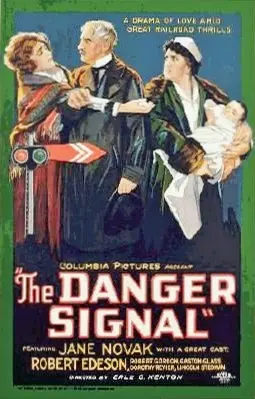
Mary Browning, the widow of the disinherited son of wealthy Cyrus Browning, is the mother of twin boys. Browning, who believes that he has only one grandchild, offers to adopt him and give him the best that money can buy. Mary sadly gives up Ralph, keeping Robert, the other son. Ralph grows up a wastrel, while Robert turns out to be a sterling young fellow, who finds work with his grandfather's railroad. The boys fall in love with the same girl, Laura Whitman; and Ralph, thinking to belittle Robert in her eyes, has him fired. Robert saves the mails from robbery and later saves his grandfather's private car from being wrecked. Cyrus Browning finally meets Mary, whom he has not seen for many years, and she introduces him to his second grandson. The old man realizes the faultiness of his attitude and promises to make amends for the hardships of Mary's life. Robert wins Laura, and Mary's gentle influence makes a man of Ralph.
Decades after its release, The Danger Signal remains a vital piece of the cinematic puzzle. Its influence can be seen in countless modern works, solidifying Erle C. Kenton's status as a master of the craft in United States and beyond.