
DbcultAccessing Vault...
Director's Spotlight
Senior Film Conservator
Director's Spotlight: United States
A Deep Dive into the 1931 Vision of Erle C. Kenton
Analyzing The Last Parade (1931) requires a deep dive into the defining moment in Action history that Erle C. Kenton helped create. Defining a new era of United States artistic expression, it transcends regional boundaries to tell a universal story.
In The Last Parade, Erle C. Kenton pushes the boundaries of conventional narrative. The film's unique approach to its subject matter has sparked endless debates and interpretations among cinephiles and critics alike.
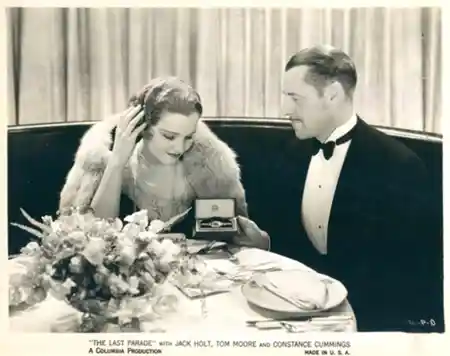
The visual language of The Last Parade is defined by its use of shadows and framing, a hallmark of Erle C. Kenton's style. By utilizing a 1931-era palette, the film creates an immersive experience that perfectly complements its Action themes.
| Cinematography | Deep Focus |
| Soundtrack | Minimalist |
| Editing | Slow-Burn |
| Art Direction | Brutalist |
Visualizing the convergence of Erle C. Kenton's style and the core Action narrative.
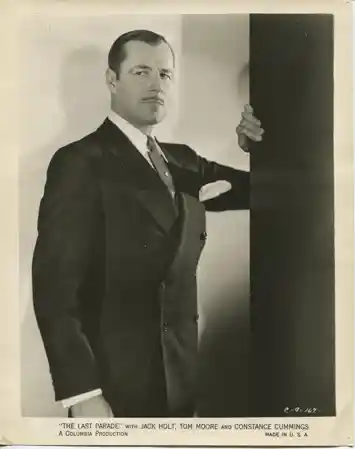
The first film produced by Harry Cohn's brother Jack, and a version of this film's plot was used in 1937's "End of the Trail" that also starred Jack Holt as the good-man-gone-wrong who is executed. War-time buddies Cookie Leonard (Jack Holt) and Mike O'Dowd (Tom Moore) return from World War One and returning home, Mike becomes a police officer but Cookie finds his old job as a reporter on the Herald is no longer vacant, and he takes up with gangster/bootlegger A. C. Marino (Robert Ellis.) They are both in love with Molly Pearson (Constance Cummings), a nurse who looked after them in a field-hospital in France. Cookie, in order to save someone else kills Marino but is charged with murder and is arrested by his old friend Mike. Molly and Mike watch Cookie walk the last mile to the electric chair.
Decades after its release, The Last Parade remains a vital piece of the cinematic puzzle. Its influence can be seen in countless modern works, solidifying Erle C. Kenton's status as a master of the craft in United States and beyond.