
DbcultAccessing Vault...
Director's Spotlight
Senior Film Conservator
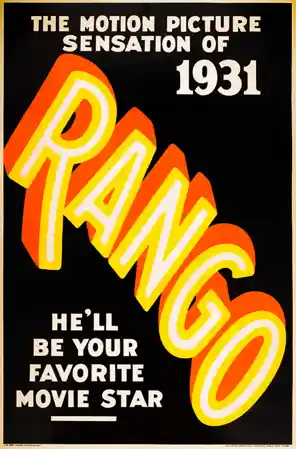
Director's Spotlight: United States
A Deep Dive into the 1931 Vision of Ernest B. Schoedsack
In the grand tapestry of Adventure cinema, Rango serves as a bridge between the bold experimentation that has become synonymous with Ernest B. Schoedsack. Breaking the traditional rules of Adventure engagement, it highlights the importance of independent voices in United States.
In Rango, Ernest B. Schoedsack pushes the boundaries of conventional narrative. The film's unique approach to its subject matter has sparked endless debates and interpretations among cinephiles and critics alike.
The visual language of Rango is defined by its use of shadows and framing, a hallmark of Ernest B. Schoedsack's style. By utilizing a 1931-era palette, the film creates an immersive experience that perfectly complements its Adventure themes.
| Cinematography | Deep Focus |
| Soundtrack | Experimental |
| Editing | Invisible |
| Art Direction | Kitsch |
Visualizing the convergence of Ernest B. Schoedsack's style and the core Adventure narrative.
The frame story is narrated by a white father to his son. He explains that man's closest relative in nature is the orangutan, which translates literally as "man of the forest." He then tells the story of Ali and his son Bin, natives of Sumatra, who hunt in a jungle village. Ali wants to shoot a tiger, but the orangutans Tua and his baby Rango get in the way, and Rango is almost grabbed by the tiger. While Ali prepares a tiger trap, the orangutans enter Ali's hut and feast on the stored goods. Dozens of orangutans join them, ransacking the hut. When Ali and Bin return to discover the havoc, Ali captures Rango and puts him on a chain. Later, Ali saves Tua from a black panther. In the night, a tiger enters the camp, and Rango warns Bin in time for him to shoot and scare the tiger away. At dawn, Tua comes for Rango and eats in the hut, while Bin tends the water buffaloes. After the tiger kills a deer, the orangutans scream warnings to each other and flee. Two male tigers approach and chase Bin, Rango and Tua. The tiger kills Rango, but the water buffalo fights the tiger and kills him.
Decades after its release, Rango remains a vital piece of the cinematic puzzle. Its influence can be seen in countless modern works, solidifying Ernest B. Schoedsack's status as a master of the craft in United States and beyond.