
DbcultAccessing Vault...
Director's Spotlight
Senior Film Conservator
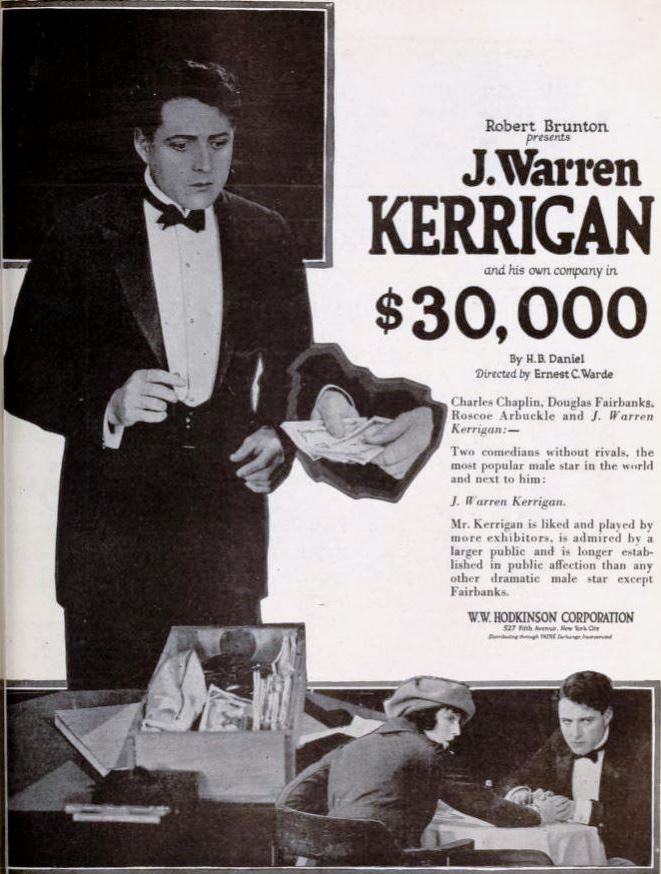
Director's Spotlight: United States
A Deep Dive into the 1920 Vision of Ernest C. Warde
When we examine the cinematic landscape of United States, $30,000 emerges as a landmark work of the enduring legacy of Ernest C. Warde's artistic contribution to the genre. Through a lens of existential fatalism and Crime tropes, it captures a specific kind of cinematic magic that is rarely replicated.
In $30,000, Ernest C. Warde pushes the boundaries of conventional narrative. The film's unique approach to its subject matter has sparked endless debates and interpretations among cinephiles and critics alike.
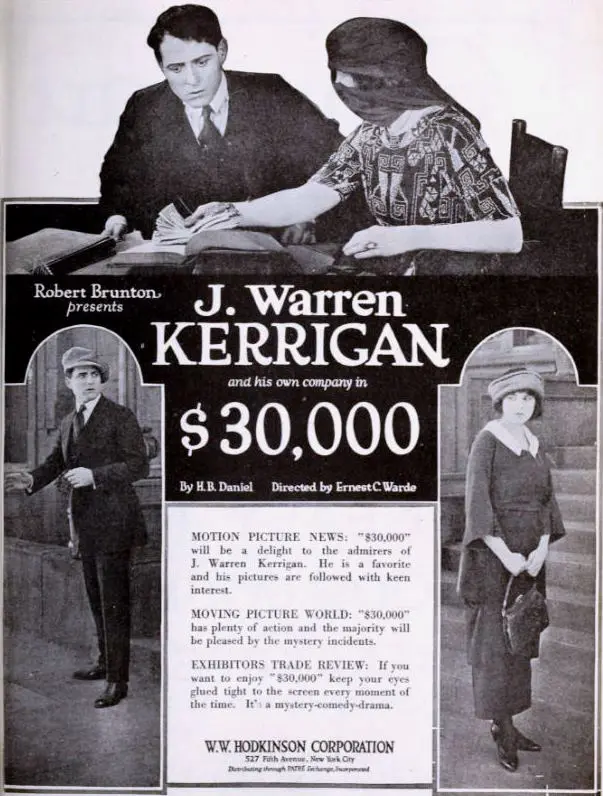
While deeply rooted in United States, $30,000 has achieved a global reach, influencing directors from various backgrounds. Its ability to translate Crime tropes into a universal cinematic language is why it remains a cult staple decades after its 1920 release.
| Cinematography | Static |
| Soundtrack | Diegetic |
| Editing | Rhythmic |
| Art Direction | Naturalist |
Visualizing the convergence of Ernest C. Warde's style and the core Crime narrative.
Ambitious but struggling attorney John Trask, is puzzled when Christine Lloyd, a mysterious young woman, entrusts him with $30,000 to purchase a necklace that will be delivered to his office the next day. The necklace was stolen by Christine's brother Sydney to pay his gambling debts and Christine, attempting to shield her brother, hires Trask to retrieve it. Trask accepts, and after hiding the money behind a painting, leaves his office for the night. Later that evening, building janitor Annester Norton discovers the money while on his rounds and absconds with it. The next day Aline Norton, the janitor's daughter and an unwitting pawn of the gamblers, appears at Trask's office with the necklace. Discovering that the money is missing, Trask goes to the casino to investigate and miraculously wins $30,000 with which he purchases the necklace. After placing the necklace in Lloyd's hands, Trask is shocked to discover that it is a fake. Entering the gambler's den, Trask retrieves the real necklace, which he restores to its rightful owner. Norton, repenting his theft, returns the money and Trask realizes that he loves the janitor's daughter.
Decades after its release, $30,000 remains a vital piece of the cinematic puzzle. Its influence can be seen in countless modern works, solidifying Ernest C. Warde's status as a master of the craft in United States and beyond.