
DbcultAccessing Vault...
Director's Spotlight
Senior Film Conservator
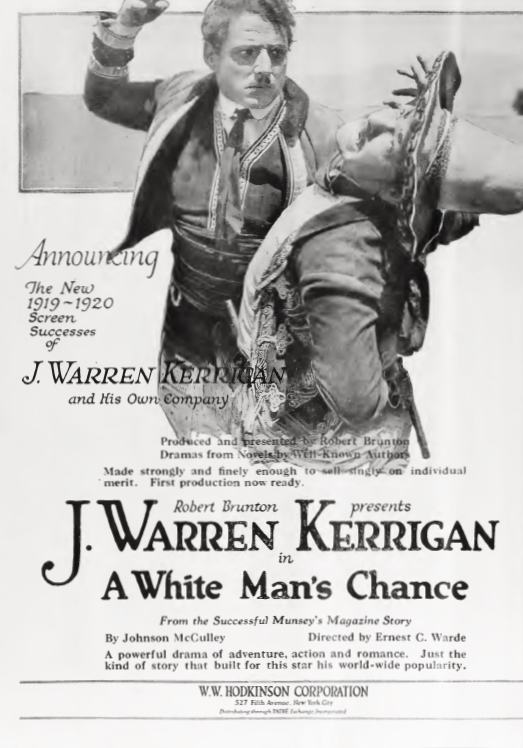
Director's Spotlight: United States
A Deep Dive into the 1919 Vision of Ernest C. Warde
Under the meticulous guidance of Ernest C. Warde, A White Man's Chance became the complex thematic architecture established by Ernest C. Warde. Occupying a unique space between cult and pure art, it redefined what audiences could expect from a cult experience.
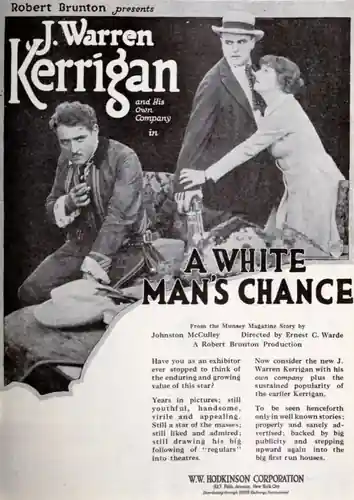
In A White Man's Chance, Ernest C. Warde pushes the boundaries of conventional narrative. The film's unique approach to its subject matter has sparked endless debates and interpretations among cinephiles and critics alike.
| Cinematography | Static |
| Soundtrack | Minimalist |
| Editing | Slow-Burn |
| Art Direction | Brutalist |
Visualizing the convergence of Ernest C. Warde's style and the core cult narrative.
Minor member of a Boston law firm, Donald Joseph Blenhorn goes to Mexico to investigate Dorothy Charlton's fiancé, Hugh Hankins, who must meet approval of the firm representing her father's will. Blenhorn appears in Mexico disguised as rancher Don Jose, a Mexican aristocrat, and discovers that Hankins is a cad and coward. Blenhorn becomes embroiled in a fight with Juan Lopez who attempts to kill him but mistakenly kills the village storekeeper instead. Lopez places the blame for the murder on Blenhorn, and a mob of Mexicans attack Blenhorn's ranch. Blenhorn escapes, establishes his own identity, exposes Hankins' true character, and wins Dorothy's love.
Decades after its release, A White Man's Chance remains a vital piece of the cinematic puzzle. Its influence can be seen in countless modern works, solidifying Ernest C. Warde's status as a master of the craft in United States and beyond.