
DbcultAccessing Vault...
Film History
Senior Film Conservator
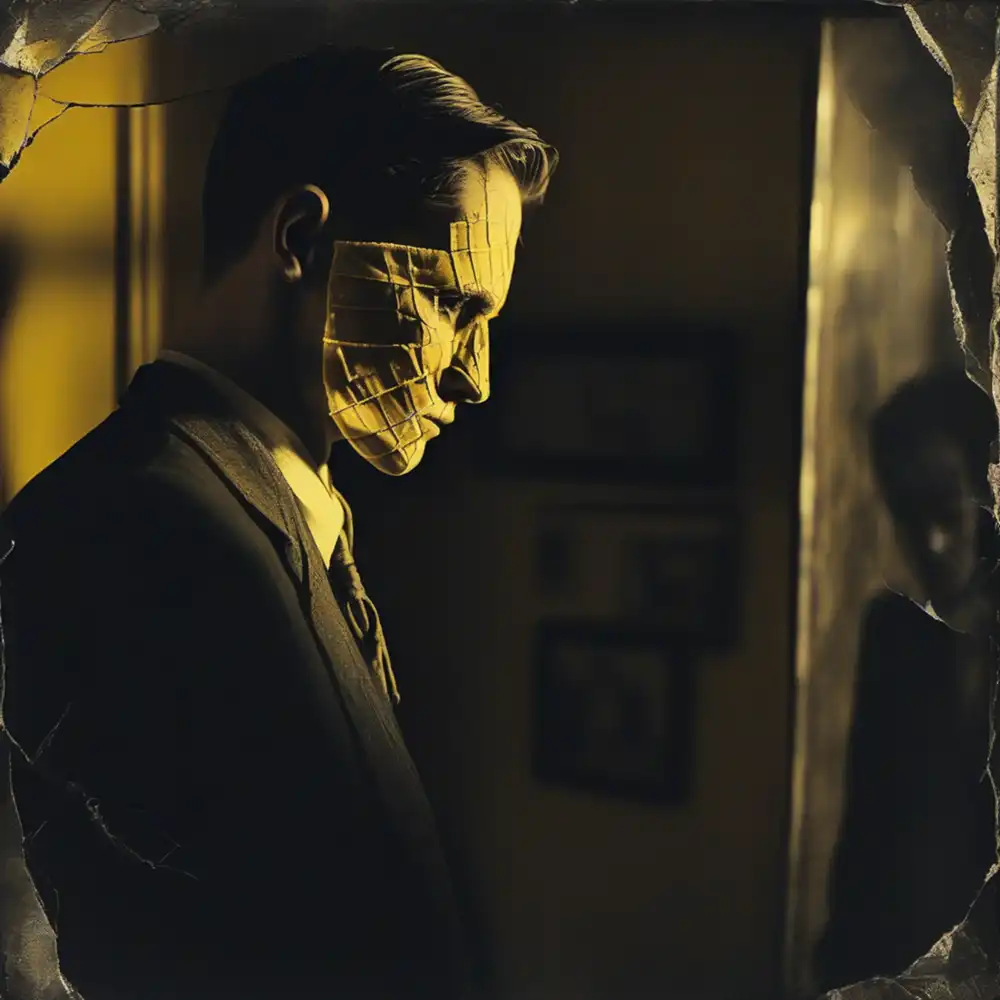
We are told that the cult of the anti-hero began with the cynical shrug of 1940s noir or the leather-clad rebellion of the 1950s. That is a convenient lie told by historians who find silent cinema too dusty for their tastes. The real DNA of the cinematic outcast—the man whose very face is an indictment of society—was forged in the 1920s. This wasn't just about 'bad guys.' It was about a specific, gnawing obsession with physical deformity as a proxy for moral exile. Long before Freddy Krueger or the scarred Bond villains, 1920s cinema was already using the scalpel and the scar to define what it meant to be a pariah.
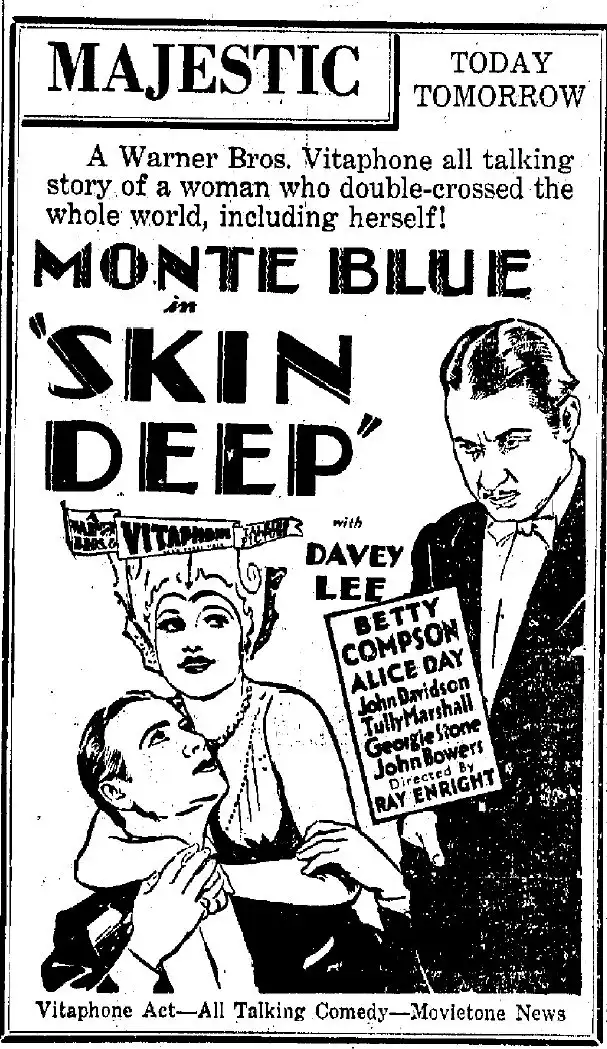
Take Lambert Hillyer’s Skin Deep (1922). It is a film that functions as a brutal precursor to everything we love about the 'reformed criminal' trope, but with a nasty, pessimistic edge. Bud Doyle, played by Milton Sills, is a man cursed with what the intertitles call 'crook-like features.' He returns from the war wanting to go straight, but his face won't let him. In the eyes of the law and his own unfaithful wife, his physiognomy is his destiny. When his wife and the corrupt Boss McQuarg frame him, the film shifts from a standard crime yarn into something far more psycho-sexual and obsessive.
Doyle eventually undergoes plastic surgery to 'fix' his face. The sequence is handled with a cold, clinical fascination that mirrors the era's growing anxiety over the 'malleability' of identity. But here is the debatable truth: the film suggests that changing the face doesn't solve the soul’s trauma. It only makes the deception more effective. Modern 'gritty' reboots of crime stories are cowardly compared to this. They want their heroes to be handsome men with one 'cool' scar. Skin Deep argues that the face is a prison, and the surgery is just a different kind of cell. It’s a cynical, proto-noir masterpiece that understands the cult of the outsider better than most modern thrillers.
You cannot discuss the aesthetics of the 1920s outcast without Lon Chaney. While most remember him for his monsters, The Trap (1922) shows him at his most human and, therefore, his most terrifying. As Gaspard the miner, Chaney doesn't need heavy prosthetics to convey a spirit that has been mangled. When his rival steals his mine and his happiness, Gaspard’s descent into obsession isn't a 'compelling narrative'—it's a slow-motion car crash of the human psyche. The way Chaney uses his hands, twisting them into claws of resentment, predates the physical language of the slasher genre by fifty years.

The 1920s didn't just show us characters who were wronged; it showed us characters who became the wrong themselves.
The revenge plot in The Trap is agonizingly patient. Gaspard waits years to spring his 'trap' on the man who ruined him. This isn't the heroic vengeance of a Hollywood blockbuster. It is the petty, soul-corroding spite of a man who has lived too long in the shadows. This is why Chaney remains the patron saint of cult cinema. He understood that the audience doesn't want to see a hero; they want to see someone who has been chewed up by the world and is finally ready to bite back. If you find Chaney’s performance 'over-the-top,' you aren't paying attention to the desperation in his eyes.
While some films focused on the individual scar, While New York Sleeps (1920) treated the entire city as a site of moral deformity. This anthology film, directed by Charles Brabin, is a grim, three-part descent into the 'Great White Way' and its various shadows. It uses the same cast in different roles—a choice that creates a disorienting sense of karmic repetition. In the 'Out of the Night' segment, a burglar becomes the accidental savior of a woman in a bigamous dilemma. It’s messy, it’s morally grey, and it’s wonderfully nihilistic.
The film’s portrayal of con men and urban predators isn't a cautionary tale; it’s a field guide. It captures the 1920s obsession with 'vice' not as a sin to be purged, but as a permanent fixture of the landscape. Unlike the polished crime films of the later Hays Code era, While New York Sleeps offers no easy redemption. The city is a predator that never stops eating. This is the root of the urban noir cult—the realization that the protagonist is just another piece of meat in the grinder.
Perhaps the most extreme version of the 1920s outcast is found in Fedor Ozep’s The Living Corpse (1929). Fjodor Protassow doesn't have a scarred face, but he has a scarred life. Unable to divorce his wife due to the rigid hypocrisy of the church, he fakes his own death. He becomes a 'living corpse,' a man who exists outside the legal and social framework of humanity. This is the ultimate cult protagonist: the man who has opted out of the world entirely.
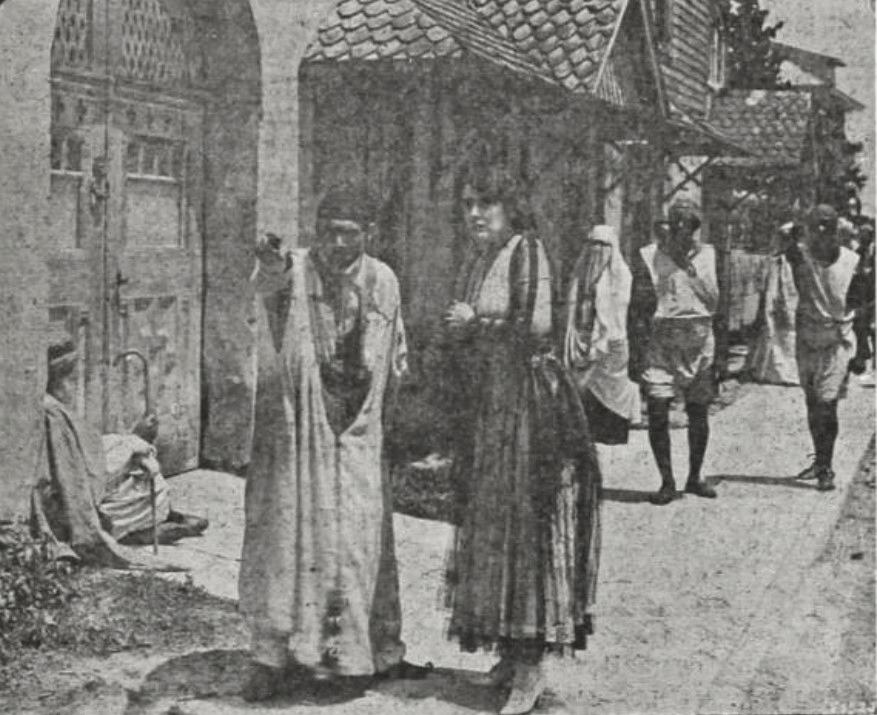
Ozep’s visual style here is frantic and suffocating. It uses the camera as a weapon, mirroring Protassow’s internal collapse. The film’s stance is radical: it suggests that the only way to be 'honest' in a corrupt society is to die—or at least pretend to. This is a much darker, more sophisticated take on identity than anything we see in modern 'identity-theft' thrillers. It’s not about losing your credit card; it’s about losing your soul to the system.
We must also look at the international outcasts, specifically in films like Vengeance (1928) and Without Benefit of Clergy (1921). These films deal with the 'disfigurement' of reputation. In Vengeance, John Cuddlestone is an officer accused of cheating at cards—a social death sentence in 1920s England. He flees to India, marrying a Hindu woman and attempting to build a life in the ruins of his former self. But the 'stain' of his past is treated like a physical deformity that he cannot wash away.
These films are often harsh, and by modern standards, their depictions of 'the other' are deeply problematic. However, as a cult historian, I argue that their value lies in their unflinching portrayal of social humiliation. They show the white, colonial 'hero' not as a savior, but as a broken, desperate man clinging to a sense of self that no longer exists. Without Benefit of Clergy takes this even further, showing a British engineer’s marriage to a native girl as an act of defiance that leads to inevitable, crushing tragedy. The 'cult' element here is the fatalism—the absolute certainty that the outsider will be destroyed by the very borders they try to cross.
Finally, we have the birth of the sci-fi cult in The Mysterious Island (1929). Count Dakkar is the quintessential cult figure: a benevolent scientist who tries to eliminate class distinctions on a volcanic island. But his 'utopia' is built on the back of mechanical madness and submarine warfare. The film is a chaotic, beautiful mess of genres, but at its heart, it is about the grotesque ambition of the scientific mind. Dakkar is the father of every 'mad scientist' who thinks they can rewrite the human condition through technology.
The 1920s were not a time of innocence. They were a time of deep, jagged scars. Whether it was the literal scars on Bud Doyle’s face in Skin Deep or the metaphorical ones on Protassow in The Living Corpse, this decade defined the cult of the outcast. These films didn't care about 'compelling narratives'; they cared about the raw, unpolished truth of being an outsider. They are the true ancestors of the transgressive cinema we worship today. If you want to understand the modern anti-hero, stop looking at the 70s. Look at the 20s. The scars were already there.