
DbcultAccessing Vault...
Film History
Senior Film Conservator
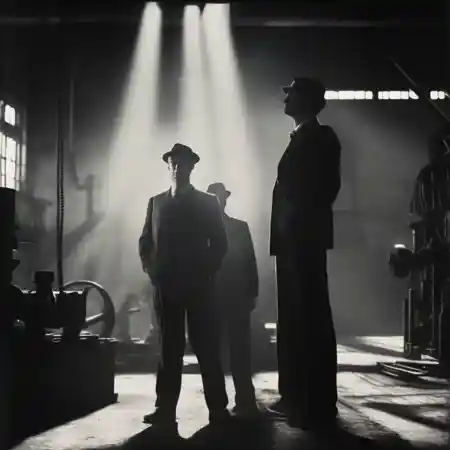
We have always been terrified of the duplicate. Long before digital deepfakes or the clinical coldness of AI, the silent era was already obsessed with the idea that a human being could be swapped out like a faulty gear in a machine. This wasn't just about twins or lookalikes. It was about the existential horror of being replaced. In the 1916 film The City of Failing Light, we see this played out with a grim, industrial efficiency. John Gray, a factory owner, falls ill during a strike. His solution? He has his brother David step into his life. The film treats this not as a tragedy, but as a corporate necessity. It is the birth of the 'NPC' mindset in cinema—the terrifying suggestion that our personalities are merely costumes for the roles we occupy in the social hierarchy.
In the early 20th century, the factory was the dominant metaphor for the human body. If a part broke, you replaced it. The City of Failing Light takes this mechanical logic and applies it to the soul. The strike at the factory mirrors the strike of the body; John Gray’s illness is a system failure, and David is the redundant backup. The visual language here is stark. The two men are interchangeable, and the film’s lighting suggests a world where shadows are more permanent than the people casting them. This is where cult cinema’s obsession with the 'fractured self' begins. It’s not a poetic duality; it’s a terrifying redundancy.
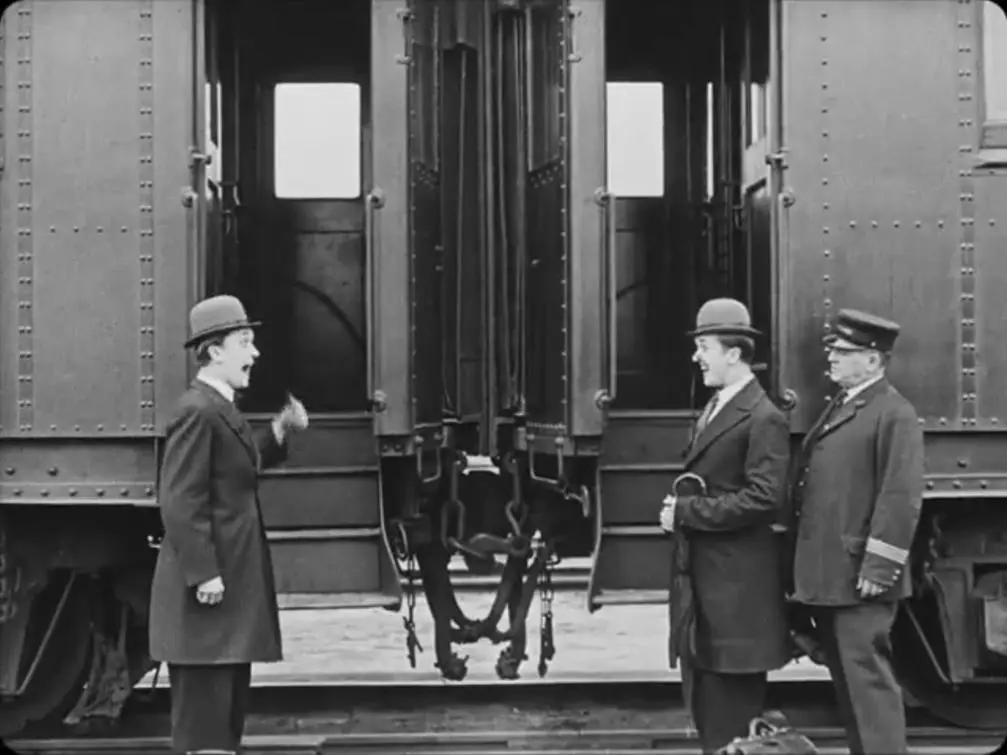
The double in silent film is rarely about the 'evil twin.' It is about the horror of discovering that your life can proceed perfectly well without you.
Look at A Splendid Hazard (1920). Karl Breitman isn't just a man with a Napoleon complex; he is a man who has entirely erased his own identity to become a ghost of history. He courts Hedda Gobert not for love, but because she possesses the artifacts of his chosen replacement self. This is a proto-cult performance. Breitman is the original 'fan' who takes his obsession so far that he attempts to rewrite his DNA through sheer force of will. The tragedy isn't that he fails; the tragedy is the void left behind when he realizes he was never Karl to begin with.
If the industrial double was about being replaced by others, the amnesia drama was about being replaced by a blank slate. The Breaking Point (1924) is a masterclass in this psychological erasure. Judson Clark flees a crime he didn't commit, disappears into a blizzard, and emerges with his history wiped clean. Modern critics often dismiss amnesia as a lazy trope, but in 1924, it was a radical exploration of the biological self. Clark becomes a 'new man' because his brain broke. There is a cold, clinical cruelty in how the film depicts his recovery—it’s not a homecoming, but the birth of a stranger in a familiar skin.
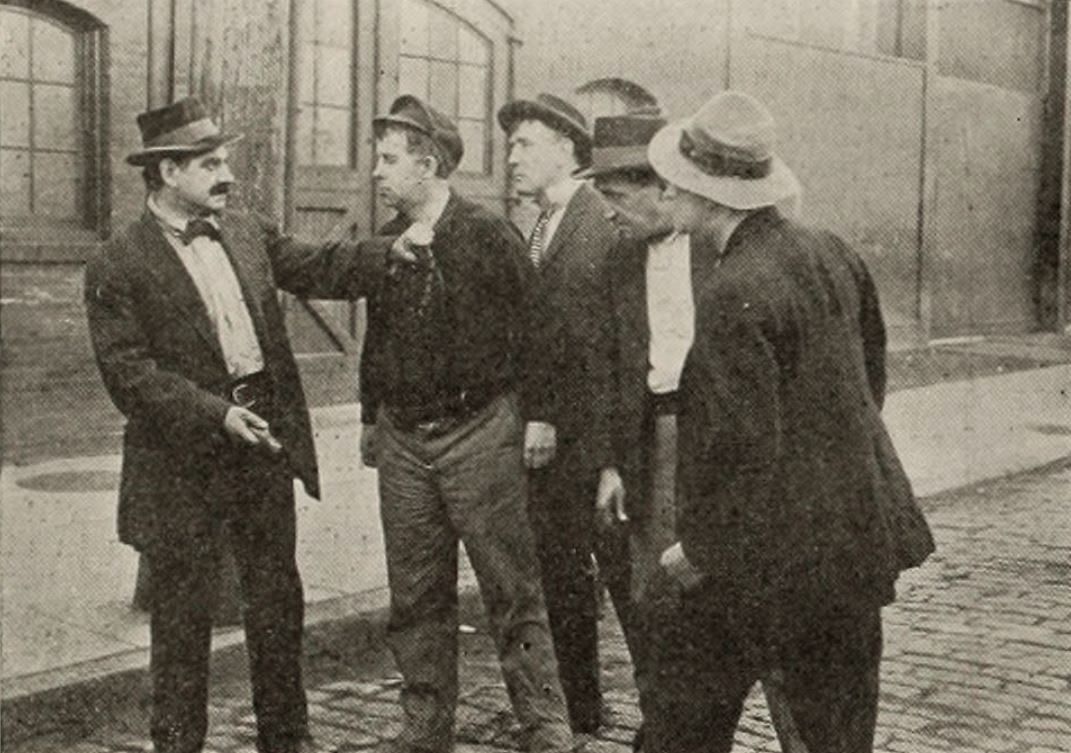
The blizzard in The Breaking Point acts as a visual reset button. The white-out conditions on screen are a metaphor for the white-out of the mind. When Clark 'wakes up,' he is a blank page, and the tragedy is that the people who loved him are now forced to interact with a puppet of his former self. This is the root of the 'synthetic soul' theme that would later dominate cult sci-fi. It posits that we are nothing more than a collection of memories, and once those are gone, the 'replacement' is just as valid as the original. I would argue that this 1924 version is far more disturbing than any modern thriller because it refuses to offer the comfort of a 'true' self hiding beneath the surface. The surface is all there is.
The ultimate erasure, however, is physical. The 1928 adventure The Man Without a Face represents the peak of this silent-era anxiety. While the title suggests a horror villain, the reality is much more nuanced. It speaks to the terror of losing the one thing that grants us individuality in a crowded, urbanized world. In an era where the first mass-media celebrities were being manufactured, the idea of a face being a 'mask' that could be removed or destroyed was a potent fear.
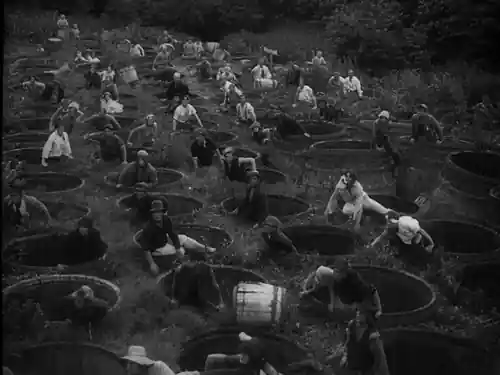
This leads us to a debatable, perhaps harsh, opinion: most modern cult cinema is far too obsessed with 'finding oneself.' The silent era was much more honest. Films like The Man Without a Face or the 18-part marathon Burning of the Red Lotus Temple (1928-31) suggest that identity is something we perform until we are exhausted, and then we are simply replaced by the next actor in the serial. In Burning of the Red Lotus Temple, the sheer length of the production meant the characters became icons that transcended the actors playing them. The role was the reality; the human was the ghost.
We cannot talk about identity erasure without mentioning the problematic, yet fascinating, use of 'the other' as a costume. In Maharadjahens yndlingshustru I (1917), identity is as fluid as a change of clothes. Elly, the colonel’s daughter, is 'replaced' by her own desire for the exotic Maharajah. She doesn't just marry him; she attempts to vanish into his world, erasing her European identity. This isn't a simple romance; it’s an act of social suicide. The film captures the terrifying allure of becoming someone else entirely, of shedding your history like a dead skin.
Similarly, The Blood Ship (1927) features a captain who has had everything stolen—his ship, his wife, and even his name. He returns as a common sailor, a ghost in his own life. The film is brutal in its depiction of how easily a man can be stripped of his status and reduced to a 'replacement' part. It’s a recurring theme in these silent masterworks: the world doesn't care who you are; it only cares what you can do. If you can't steer the ship, someone else will. If you can't be the husband, a 'twin' will suffice. It is a philosophy of cold, hard utility.
This theme even leaks into the comedies of the era, though in a more cynical form. In Twin Husbands, the plot hinges on the fact that a father-in-law has never seen his daughter's husband. The identity is a blank check waiting to be forged. In Bright Lights, a 'city chap' puts on 'rube' clothes to kid a dancer, only to find that the costume dictates his reality. These films suggest that we are all just a set of clothes and a haircut away from being someone else entirely. It’s a terrifyingly modern concept: the self as a customizable avatar.
Why does this matter to the modern cult obsessive? Because we are living in the world these films predicted. We are the generation of the 'replacement flesh.' We curate our identities online, swapping faces and histories with the ease of an amnesiac in a 1920s melodrama. The silent era didn't have the technology to show us the 'glitch in the matrix,' so they used the only tools they had: twins, amnesia, and masks. And frankly, their version was scarier. There is no digital glitch in The Breaking Point—just the cold, indifferent snow and a man who has forgotten his own name.
The debatable truth is this: we don't watch these films to 'rediscover' a lost era. We watch them because they are the only ones honest enough to admit that we are all replaceable. Whether it's the factory owner in The City of Failing Light or the disgraced captain in The Blood Ship, the message is the same: the individual is a myth. The system—be it industrial, social, or biological—always has a spare part waiting in the wings. Cult cinema thrives on this realization. It is the cinema of the outsider who knows that the 'inside' is just a rotating cast of actors playing the same roles until the film runs out.
If you want to understand the modern cult of the fractured self, stop looking at 80s slashers or 90s cyberpunk. Look at the 1920s. Look at the men without faces, the brothers who took over factories, and the amnesiacs who vanished into the white. They were the first ones to realize that the most terrifying thing in the world isn't a monster—it's the person who looks exactly like you, standing right behind you, waiting for you to stumble so they can take your place.