
DbcultAccessing Vault...
Director's Spotlight
Senior Film Conservator
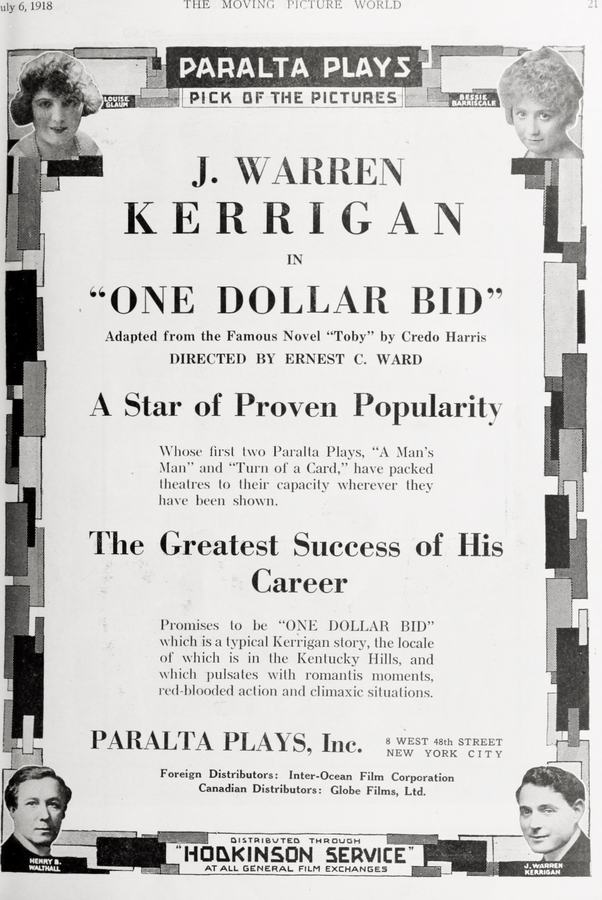
Director's Spotlight: United States
A Deep Dive into the 1918 Vision of Ernest C. Warde
The artistic breakthrough represented by One Dollar Bid in 1918 highlights the uncompromising vision of Ernest C. Warde that defines this cult masterpiece. In the context of United States's rich cinematic history, it captures a specific kind of cinematic magic that is rarely replicated.
In One Dollar Bid, Ernest C. Warde pushes the boundaries of conventional narrative. The film's unique approach to its subject matter has sparked endless debates and interpretations among cinephiles and critics alike.
To fully appreciate One Dollar Bid, one must consider the cinematic climate of 1918. During this period, United States was undergoing significant artistic shifts, and Ernest C. Warde was at the forefront of this cult movement, often challenging established norms.
| Cinematography | High-Contrast |
| Soundtrack | Diegetic |
| Editing | Rhythmic |
| Art Direction | Naturalist |
Visualizing the convergence of Ernest C. Warde's style and the core cult narrative.
Toby, a peculiar young man, lives in a shack in the Kentucky hills, spending his days drinking moonshine and whittling toys for the local children. Fearful of his influence, the villagers revive an old Kentucky statute whereby Toby may be sold into servitude for a year. Virginia Dare, horrified by these proceedings, purchases Toby for one dollar and returns with him to her Uncle Poindexter's tobacco plantation. Invigorated by his love for Virginia, Toby forsakes his whiskey habit and labors diligently on the plantation until his old friend Dink Wallerby, a moonshiner, begs Toby to care for his sick daughter Nell. En route to obtain medicine, Dink stabs a revenue officer with Toby's knife but confesses just before Toby is sentenced. Toby, at one time a lawyer, successfully defends Dink, after which a visiting judge proclaims Toby his son. Having regained his good name, Toby proposes to Virginia.
Decades after its release, One Dollar Bid remains a vital piece of the cinematic puzzle. Its influence can be seen in countless modern works, solidifying Ernest C. Warde's status as a master of the craft in United States and beyond.