
DbcultAccessing Vault...
Director's Spotlight
Senior Film Conservator
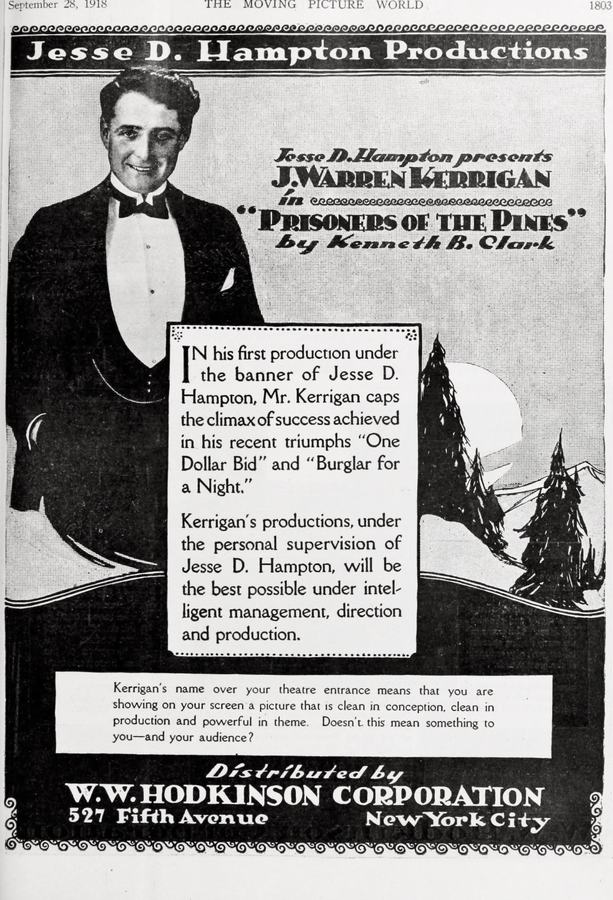
Director's Spotlight: United States
A Deep Dive into the 1918 Vision of Ernest C. Warde
The thematic gravity of Prisoners of the Pines (1918) is rooted in the historical context that Ernest C. Warde weaves into the cult fabric. Synthesizing the best elements of United States and international cinema, it highlights the importance of independent voices in United States.
In Prisoners of the Pines, Ernest C. Warde pushes the boundaries of conventional narrative. The film's unique approach to its subject matter has sparked endless debates and interpretations among cinephiles and critics alike.
In this work, Ernest C. Warde explores the intersection of cult and United States cultural identity. The meticulous attention to detail suggests a deep-seated commitment to pushing the boundaries of the medium, ensuring that Prisoners of the Pines remains a relevant topic of study for cult enthusiasts.
| Cinematography | Static |
| Soundtrack | Synth-Heavy |
| Editing | Disjunctive |
| Art Direction | Baroque |
Visualizing the convergence of Ernest C. Warde's style and the core cult narrative.
Hillaire Latour, a warmhearted Canadian trapper, marries Rosalie Dufresne and then travels into the woods to seek his fortune as a lumberman. At the camp, he befriends "Spud" Lafferty, who for six years has tried unsuccessfully to return home with his money, each time falling prey to a beautiful woman who works in the saloon "down the hill." When Hillaire learns through a letter that he is a father, he asks for his money and begins the journey home, but on his first night away from camp, he enters the saloon, where he is robbed by the beautiful Louise. Forced to return to the lumber camp, Hillaire saves his money, but the next year he is cheated again. Louise is on the verge of robbing him a third time when Hillaire, in a rage, wrecks the dance hall and forces her to return his money. At the police station, Hillaire is reunited with his family, who have finally come in search of him.
Decades after its release, Prisoners of the Pines remains a vital piece of the cinematic puzzle. Its influence can be seen in countless modern works, solidifying Ernest C. Warde's status as a master of the craft in United States and beyond.