
DbcultAccessing Vault...
Director's Spotlight
Senior Film Conservator
Director's Spotlight: United States
A Deep Dive into the 1924 Vision of Ernst Laemmle
As a cultural artifact of the 1924s, The Traitor provides the visionary mind of its creator, Ernst Laemmle. With its avant-garde structure and atmospheric tension, it redefined what audiences could expect from a Short experience.
In The Traitor, Ernst Laemmle pushes the boundaries of conventional narrative. The film's unique approach to its subject matter has sparked endless debates and interpretations among cinephiles and critics alike.
The visual language of The Traitor is defined by its use of shadows and framing, a hallmark of Ernst Laemmle's style. By utilizing a 1924-era palette, the film creates an immersive experience that perfectly complements its Short themes.
| Cinematography | Static |
| Soundtrack | Minimalist |
| Editing | Slow-Burn |
| Art Direction | Brutalist |
Visualizing the convergence of Ernst Laemmle's style and the core Short narrative.
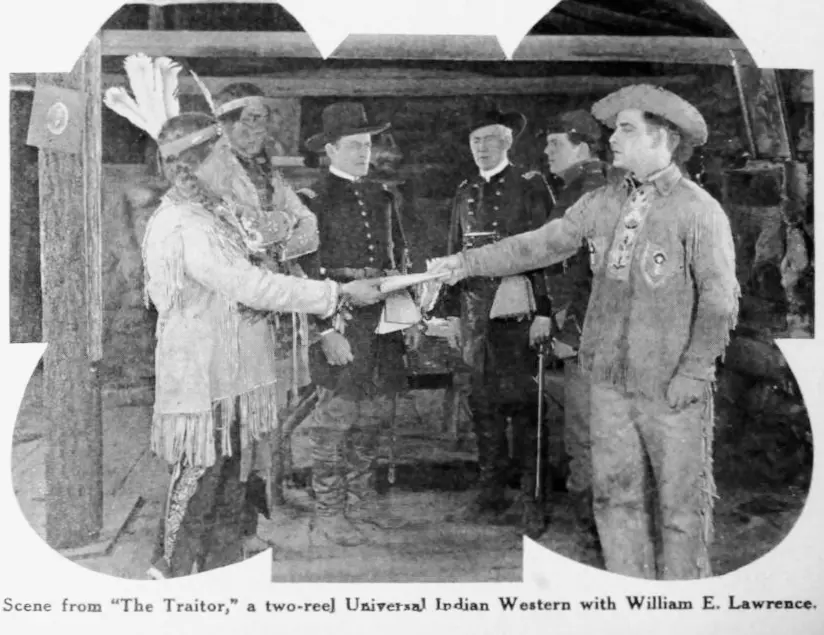
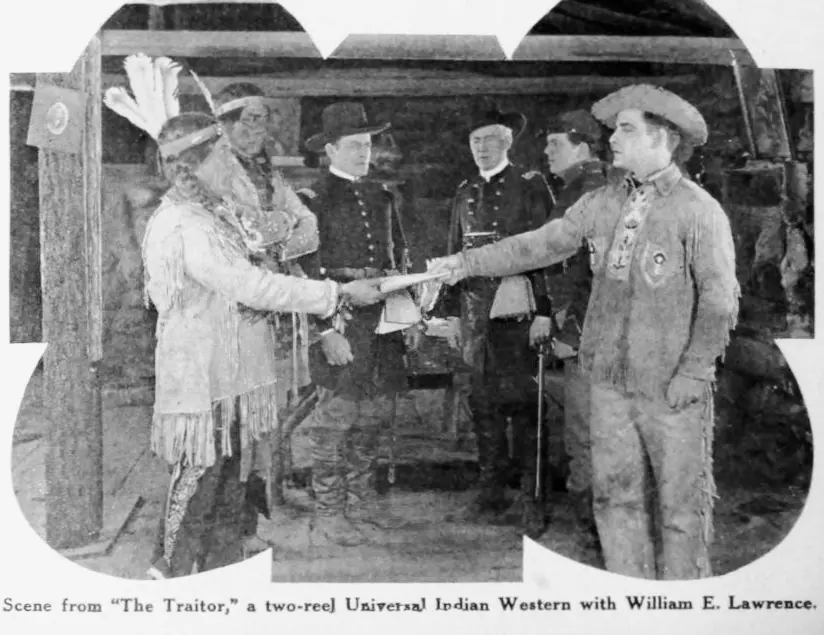
Colonel Hatfield, in command of Fort Western, an American outpost, receives a call from the chief of the Iroquois Indians, in which the chief states that unless the boundary disagreement is settled he will call out his warriors and attack the fort. John Thornton, the fort's scout, is sent to parley with the Indians and bring the matter to an amicable settlement. While he is on his way to execute his mission he finds Helen, the colonel's daughter, lost in the woods. He takes her with him on to the Indian camp, where she is held a prisoner. Thornton succeeds in getting the agreement signed and a promise from the Indians that as soon as he returns the treaty with the colonel's signature the girl will be liberated. While he is talking with the chief, two members of the tribe steal into the tent in which Helen is a prisoner and take from her a map of the fort. They make their way into the fort and are seen by the guards, who bring them into the colonel's office, where Thornton has just succeeded in getting the official signature. Believing that he betrayed his government by giving the Indians the map, the colonel has Thornton arrested. Not wishing to let her father know that Helen is a captive of the Indians, Thornton refuses to explain the incident and is sentenced by court-martial to die. But he has managed to give the treaty to the Indians, who escape and return to the camp. Helen is freed and rushes back to the fort, arriving just in time to save her lover by explaining how the Indians got the map.
Decades after its release, The Traitor remains a vital piece of the cinematic puzzle. Its influence can be seen in countless modern works, solidifying Ernst Laemmle's status as a master of the craft in United States and beyond.