
DbcultAccessing Vault...
Director's Spotlight
Senior Film Conservator
Director's Spotlight: United States
A Deep Dive into the 1936 Vision of Errol Taggart
The Drama DNA of Women Are Trouble is a reflection of United States's the historical context that Errol Taggart weaves into the Drama fabric. Challenging the viewer to find meaning in the Drama shadows, it transcends regional boundaries to tell a universal story.
In Women Are Trouble, Errol Taggart pushes the boundaries of conventional narrative. The film's unique approach to its subject matter has sparked endless debates and interpretations among cinephiles and critics alike.
To fully appreciate Women Are Trouble, one must consider the cinematic climate of 1936. During this period, United States was undergoing significant artistic shifts, and Errol Taggart was at the forefront of this Drama movement, often challenging established norms.
| Cinematography | Noir-Inspired |
| Soundtrack | Minimalist |
| Editing | Slow-Burn |
| Art Direction | Brutalist |
Visualizing the convergence of Errol Taggart's style and the core Drama narrative.
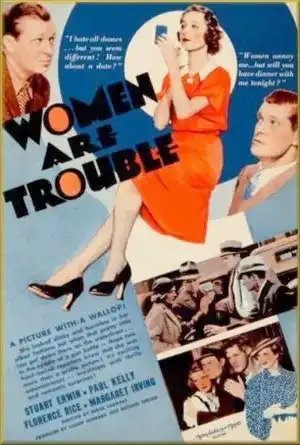
When Prohibition ends, the mobsters move into the "protection" racket; those who do not pay are knocked off. Small-town reporter Ruth wants a job at the big-city paper, but the editor will not hire her, so she looks for a story and sees the murder of Liquor Board Commissioner Eldridge. After she gets the job, she gets the picture of the killer who knocks off Murty, the driver who knocked over Eldridge. Ruth is in the thick of the investigation and one step ahead of Casey.
Decades after its release, Women Are Trouble remains a vital piece of the cinematic puzzle. Its influence can be seen in countless modern works, solidifying Errol Taggart's status as a master of the craft in United States and beyond.