
DbcultAccessing Vault...
Director's Spotlight
Senior Film Conservator
Director's Spotlight: United States
A Deep Dive into the 1914 Vision of Étienne Arnaud
Deciphering the layers of The Dancer and the King (1914) reveals a monumental shift in cult filmmaking spearheaded by Étienne Arnaud. With its avant-garde structure and atmospheric tension, offering layers of thematic complexity that demand repeated viewing.
In The Dancer and the King, Étienne Arnaud pushes the boundaries of conventional narrative. The film's unique approach to its subject matter has sparked endless debates and interpretations among cinephiles and critics alike.
In this work, Étienne Arnaud explores the intersection of cult and United States cultural identity. The meticulous attention to detail suggests a deep-seated commitment to pushing the boundaries of the medium, ensuring that The Dancer and the King remains a relevant topic of study for cult enthusiasts.
| Cinematography | High-Contrast |
| Soundtrack | Synth-Heavy |
| Editing | Rhythmic |
| Art Direction | Naturalist |
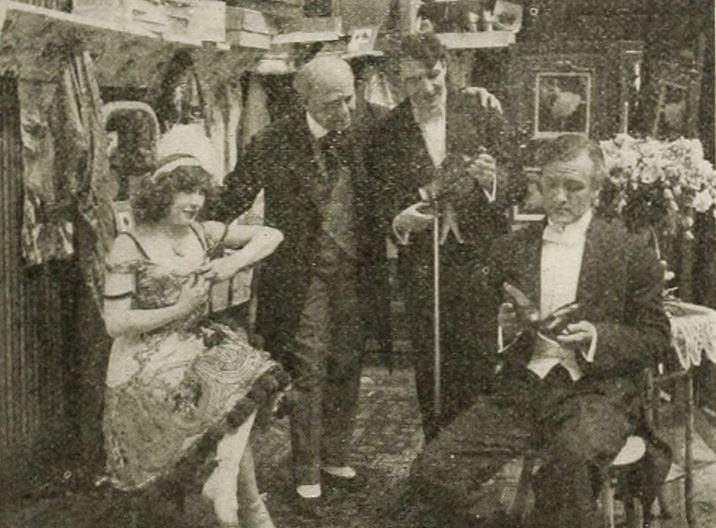
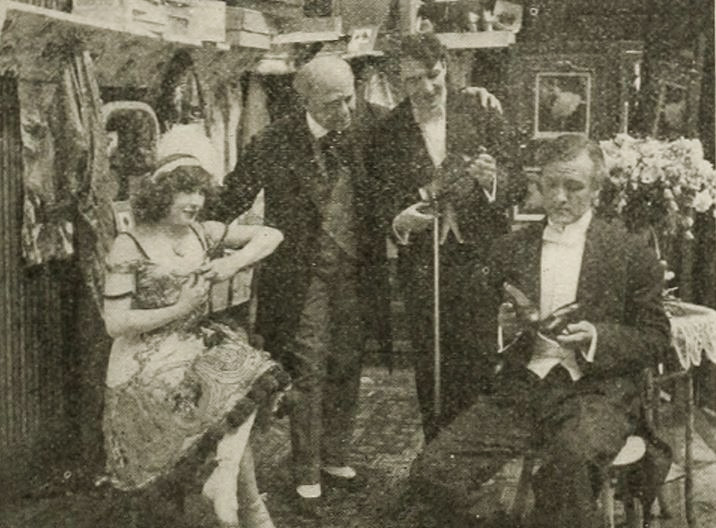
Visualizing the convergence of Étienne Arnaud's style and the core cult narrative.
The secretary of the young king of Bavarre sees and is impressed with a little girl. He watches her dancing in the street. When her father dies, the secretary takes the little dancer under his care and in time she becomes the premiere danseuse of the capital. The young king sees her and becomes infatuated. To win her, he showers attention and riches and in turn she pleads for the poor of the nation. The king grants her request, thereby incurring the enmity of the nobility, who lay all the blame for his acts at the little dancer's door. A plot is discovered, which will mean the death of the king, if it is carried out, but the dancer risks her life to warn him. The few that are loyal to him are able to incite the people to battle against the revolutionary army. Enraged at the failure of his plotting, the prime minister who has sought to supplant the king, realizes that Lola is responsible for his downfall and in the duel between the dancer and the minister, the minister is killed. Leaderless, the revolutionists are overcome, and the king weds the dancer, with general rejoicing on the part of the populace.
Decades after its release, The Dancer and the King remains a vital piece of the cinematic puzzle. Its influence can be seen in countless modern works, solidifying Étienne Arnaud's status as a master of the craft in United States and beyond.