
DbcultAccessing Vault...
Director's Spotlight
Senior Film Conservator
Director's Spotlight: United States
A Deep Dive into the 1922 Vision of Eugene De Rue
The thematic gravity of My Hero! (1922) is rooted in the artistic risks taken by Eugene De Rue that eventually paid off. Defining a new era of United States artistic expression, it demands to be seen by anyone who cares about the art of film.
In My Hero!, Eugene De Rue pushes the boundaries of conventional narrative. The film's unique approach to its subject matter has sparked endless debates and interpretations among cinephiles and critics alike.
The visual language of My Hero! is defined by its use of shadows and framing, a hallmark of Eugene De Rue's style. By utilizing a 1922-era palette, the film creates an immersive experience that perfectly complements its Comedy themes.
| Cinematography | High-Contrast |
| Soundtrack | Minimalist |
| Editing | Slow-Burn |
| Art Direction | Brutalist |
Visualizing the convergence of Eugene De Rue's style and the core Comedy narrative.
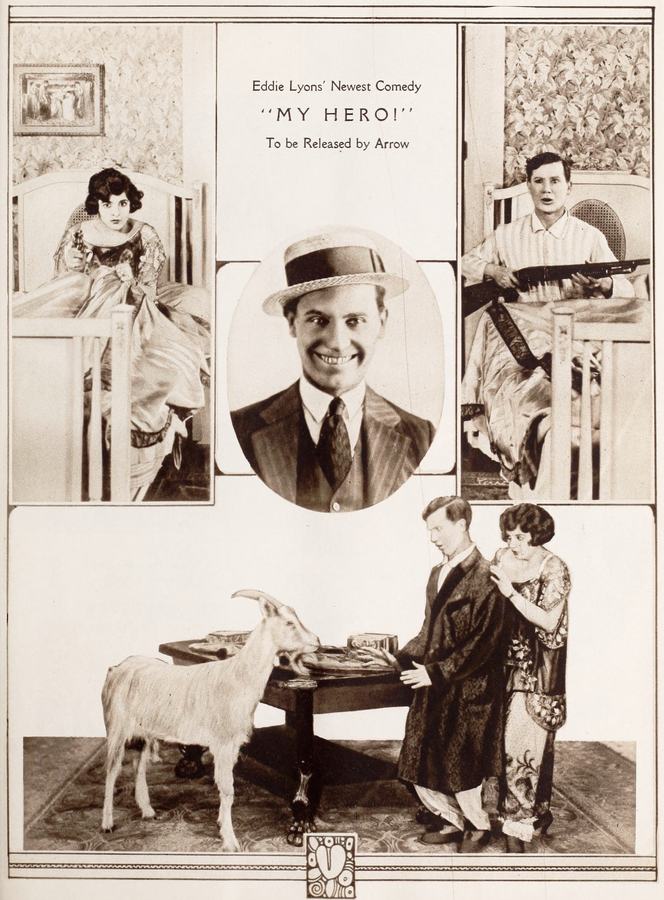
Los Angeles is in the midst of a burglar scare which worries both Eddie Lyons and his little wife, as well as their colored cook. There are a number of false alarms which involve many ludicrous happenings. Then Eddie reaches his office where the boss assigns him to the task of depositing ten thousand dollars in cash in the bank. He reaches the bank only to find it closed and upon returning to the office finds that closed too. He notifies his employer by telephone and is instructed to take care of the money until the following morning. Then, unbeknown to him, he arranges to have two detectives guard the house during the night. This causes many other complications, for the detectives are mistaken for robbers, but all ends well.
Decades after its release, My Hero! remains a vital piece of the cinematic puzzle. Its influence can be seen in countless modern works, solidifying Eugene De Rue's status as a master of the craft in United States and beyond.