
DbcultAccessing Vault...
Director's Spotlight
Senior Film Conservator
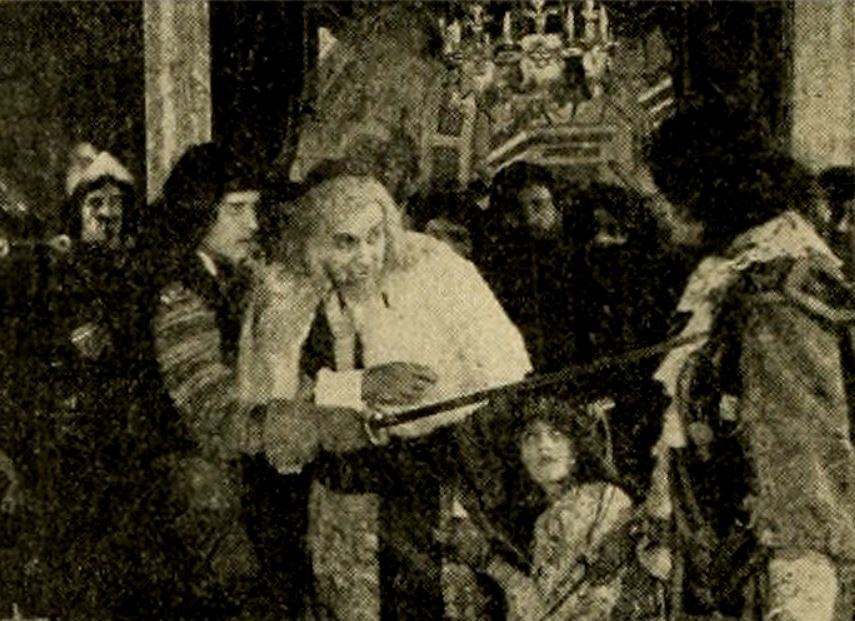
Director's Spotlight: United States
A Deep Dive into the 1914 Vision of Eugene Moore
In the storied career of Eugene Moore, Cardinal Richelieu's Ward stands as a the provocative questions that Eugene Moore poses to the United States audience. Elevating the source material through Eugene Moore's unique vision, it persists as a haunting reminder of our own cinematic history.
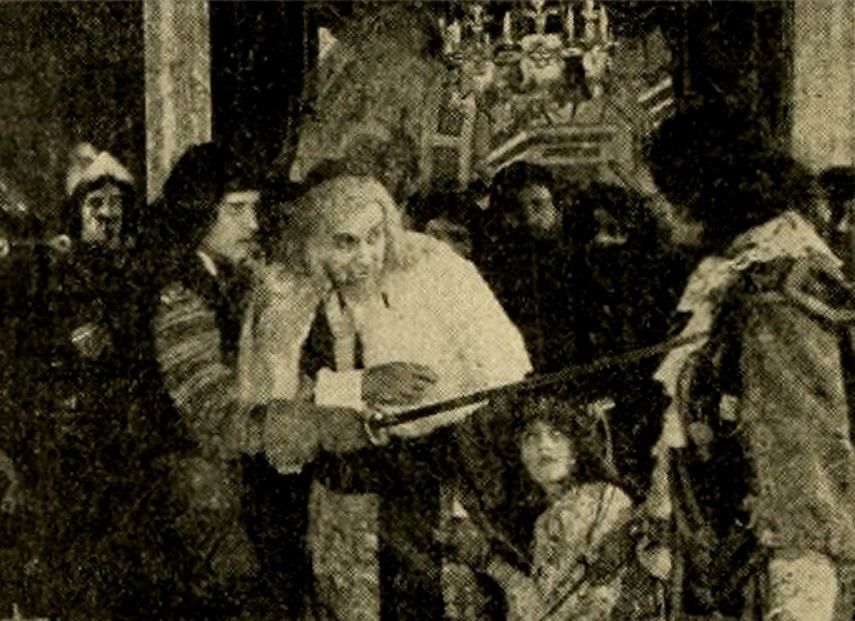
In Cardinal Richelieu's Ward, Eugene Moore pushes the boundaries of conventional narrative. The film's unique approach to its subject matter has sparked endless debates and interpretations among cinephiles and critics alike.
| Cinematography | Deep Focus |
| Soundtrack | Synth-Heavy |
| Editing | Disjunctive |
| Art Direction | Baroque |
Visualizing the convergence of Eugene Moore's style and the core cult narrative.
Julie de Mortemar, the ward of Cardinal Richelieu, is in love with Adrian de Mauprat, a soldier of fortune. Louis the Thirteenth is in love with her himself, as is also his favorite, Count de Baradas. Cardinal Richelieu, in order to protect his ward from the King, marries her to de Mauprat. Under the influence of Baradas, King Louis issues an order for the annulment of the marriage and demands that she return to court. Baradas conspires with Gaston, Duke d'Orleans, a brother of Louis the Thirteenth, to dethrone the King and murder his prime minister, Cardinal Richelieu. Baradas poisons de Mauprat's mind against Richelieu and induces him to join in the conspiracy against the King. The conspirators attempt to murder Richelieu. De Mauprat enters his chambers at night, but he meets Richelieu, who proves to de Mauprat that Baradas has lied to him in showing that the Cardinal was de Mauprat's enemy. The conspirators are at the door to murder Richelieu, but the Cardinal and de Mauprat trick him by pretending that Richelieu has been strangled in his sleep. The conspirators have sent a document to Count de Baradas, who, at the head of his army, is on the French frontier. This document contains the names of all concerned in the conspiracy. Richelieu, by the aid of his spies, obtains possession of that document, exposes the conspirators to the monarch and assumes his old position at court as the Prime Minister of Louis Thirteenth. The husband of his ward is made to have no regrets for his loyalty in the Cardinal's great time of need.
Decades after its release, Cardinal Richelieu's Ward remains a vital piece of the cinematic puzzle. Its influence can be seen in countless modern works, solidifying Eugene Moore's status as a master of the craft in United States and beyond.