
DbcultAccessing Vault...
Director's Spotlight
Senior Film Conservator
Director's Spotlight: United States
A Deep Dive into the 1914 Vision of Eugene Moore
When we examine the cinematic landscape of United States, Pamela Congreve emerges as a landmark work of the enduring legacy of Eugene Moore's artistic contribution to the genre. Through a lens of existential fatalism and cult tropes, it captures a specific kind of cinematic magic that is rarely replicated.
In Pamela Congreve, Eugene Moore pushes the boundaries of conventional narrative. The film's unique approach to its subject matter has sparked endless debates and interpretations among cinephiles and critics alike.
While deeply rooted in United States, Pamela Congreve has achieved a global reach, influencing directors from various backgrounds. Its ability to translate cult tropes into a universal cinematic language is why it remains a cult staple decades after its 1914 release.
| Cinematography | Handheld |
| Soundtrack | Experimental |
| Editing | Elliptical |
| Art Direction | Expressionist |
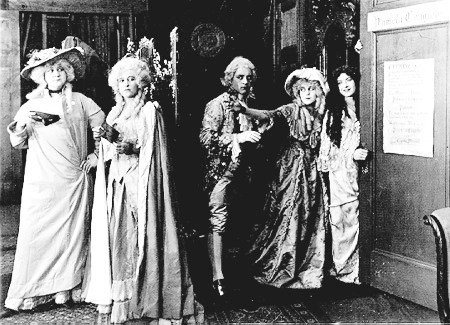
Visualizing the convergence of Eugene Moore's style and the core cult narrative.
Pamela Congreve, the daughter of an old fisherman, is a carefree child of nature, whose heart has been won by Lord Charteris, a treacherous noble, who is the secret leader of a band of smugglers. Charteris tells Pamela's father of the wealth he will win if he joins the smugglers, and the deluded old man finally consents. The smugglers land a cargo on the sea coast, but the suspicions of the revenue officers are aroused and they pursue the smugglers. Lord Charteris and the old fisherman are overtaken, and, to save himself from capture, Charteris tells the coast guards of his rank and claims that he captured his companion, whom he denounces as a smuggler. In spite of Pamela's pleas, Charteris refuses to aid him, and the old man is put to death. Vowing to be revenged upon the treacherous Charteris, Pamela goes out into the world. She obtains employment at a wayside inn, and there once more meets Charteris. She stabs him, and believes that she has killed him, but it is merely a ruse of the wily noble. Pamela joins a troupe of traveling actors, and goes to London, where she soon becomes one of the reigning favorites. Pamela's chief admirer is the Duke of Harlow. He asks her to marry him, but she refuses, and struggles vainly to conceal her deep love for him, feeling that her past makes her unfit to be his wife. The Duke of Harlow's wealth has made Lord and Lady Trevor consider him as a desirable husband for Kitty, their daughter, but that strong-willed person has already selected a future husband who boasts neither wealth nor title. So Kitty and her beloved go to Pamela, whom they know the Duke adores, and beg her to accept him. Then Kitty will not have to wed him. Pamela promises to aid the young couple, and in order to do so, manages to win an invitation to Lord Trevor's ball. At the grand ball at Trevor House the load of guilt is lifted from Pamela's heart for she meets Lord Charteris again, and realizes that he still lives. Charteris is as unscrupulous as ever, and determines to steal the Trevor jewels. An opportunity presents itself when Trevor shows his guests the famous gems, and after they are replaced in the strong box the key falls to the floor, and is found by Charteris. Pamela, however, suspicious of the man she hates, keeps watch during the night and discovers him in the act of stealing the gems, but Charteris adroitly directs the suspicion upon Pamela, playing upon the prejudice of the others for "the stage-woman." Harlow takes her part. The Duke threatens to prove Charteris to be a scoundrel, and the latter, fearing that he will be exposed, plans to silence Harlow forever. The cowardly plot does not succeed, for word is brought to Pamela and she reaches Harlow in time to warn him. Charteris later succeeds in kidnapping Pamela, but they are overtaken by Harlow, and Charteris is killed, while Pamela, now convinced that her "past" is buried, promises to marry the man she loves.
Decades after its release, Pamela Congreve remains a vital piece of the cinematic puzzle. Its influence can be seen in countless modern works, solidifying Eugene Moore's status as a master of the craft in United States and beyond.