
DbcultAccessing Vault...
Director's Spotlight
Senior Film Conservator
Director's Spotlight: United States
A Deep Dive into the 1935 Vision of Ewald André Dupont
Analyzing The Bishop Misbehaves (1935) requires a deep dive into the unique directorial voice that Ewald André Dupont brought to the screen. By challenging the status quo of 1935 cinema, it continues to spark endless debates among critics and cinephiles alike.
In The Bishop Misbehaves, Ewald André Dupont pushes the boundaries of conventional narrative. The film's unique approach to its subject matter has sparked endless debates and interpretations among cinephiles and critics alike.
The visual language of The Bishop Misbehaves is defined by its use of shadows and framing, a hallmark of Ewald André Dupont's style. By utilizing a 1935-era palette, the film creates an immersive experience that perfectly complements its Crime themes.
| Cinematography | Static |
| Soundtrack | Minimalist |
| Editing | Slow-Burn |
| Art Direction | Brutalist |
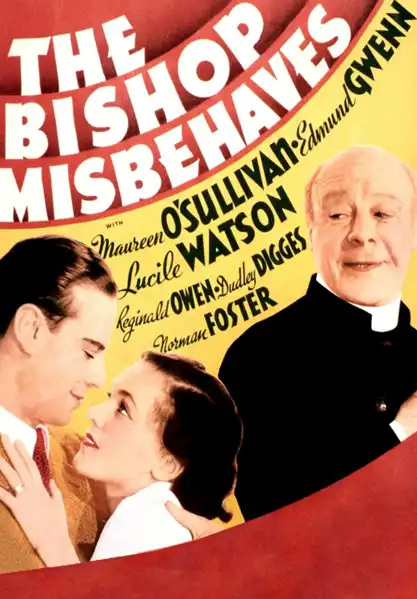
Visualizing the convergence of Ewald André Dupont's style and the core Crime narrative.
On a walking tour of English cathedrals, Donald Meadows meets Hester Granthem in church. Hearing he is from that hot-bed of crime, Chicago, Hester asks Donald to help her in a robbery she has planned. Thinking it a joke, he plays along; but Hester is serious, and hearing that she plans to rob Mr. Waller, the man who has cheated her father out of thousands of pounds, Donald agrees. A robbery at a pub is arranged, but the Bishop of Broadminster, an avid mystery fan, and his sister stumble into it. Playing detective the Bishop complicates matters and each side, the Bishop, the unscrupulous Waller, the gang Hester hires, and Hester and Donald, each get the upper hand along the way.
Decades after its release, The Bishop Misbehaves remains a vital piece of the cinematic puzzle. Its influence can be seen in countless modern works, solidifying Ewald André Dupont's status as a master of the craft in United States and beyond.