
DbcultAccessing Vault...
Director's Spotlight
Senior Film Conservator
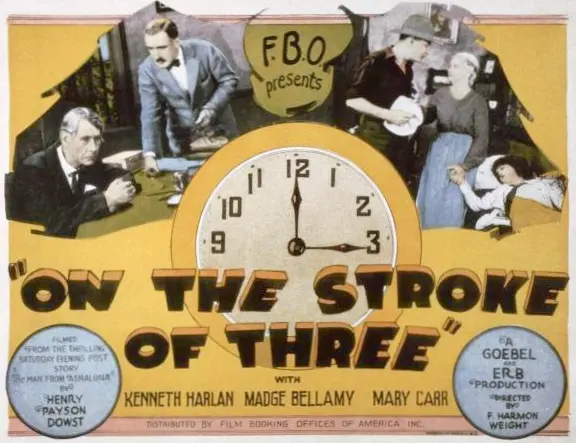
Director's Spotlight: United States
A Deep Dive into the 1924 Vision of F. Harmon Weight
The artistic breakthrough represented by On the Stroke of Three in 1924 highlights the philosophical inquiries that F. Harmon Weight embeds within the narrative. Framed by the hauntingly beautiful landscapes of the production, it leaves an indelible mark on the soul of the viewer.
In On the Stroke of Three, F. Harmon Weight pushes the boundaries of conventional narrative. The film's unique approach to its subject matter has sparked endless debates and interpretations among cinephiles and critics alike.
The visual language of On the Stroke of Three is defined by its use of shadows and framing, a hallmark of F. Harmon Weight's style. By utilizing a 1924-era palette, the film creates an immersive experience that perfectly complements its Drama themes.
| Cinematography | High-Contrast |
| Soundtrack | Synth-Heavy |
| Editing | Rhythmic |
| Art Direction | Naturalist |
Visualizing the convergence of F. Harmon Weight's style and the core Drama narrative.
A financier, Lafayette Jordon, attempts to buy property in the Ashaluna Valley, in order to build a reservoir as part of a power development project. The chief obstacle to his plan is a young inventor, Judson Forrest, who refuses to part with the family homestead that blocks a proposed sluice-way. Seeking money to finance his invention of a new kind of stove, Judson mortgages the family home and goes to New York. There, he falls in love with Mary Jordon, the daughter of the financier. Meanwhile, back home, the village banker sells the mortgage on the Judson homestead to lawyer Henry Mogridge, who begins foreclosure procedures. When Judson hears of this transaction, he breaks off with Mary, believing that she has been "using" him. With the help of friends, Judson raises the necessary money to prevent the loss of the Forrest property and pays off the mortgage in the nick of time. When he learns that neither Mary Jordan nor her father knew of Mogridge's action, he reconciles with her and obtains Lafayette Jordan's permission to marry her.
Decades after its release, On the Stroke of Three remains a vital piece of the cinematic puzzle. Its influence can be seen in countless modern works, solidifying F. Harmon Weight's status as a master of the craft in United States and beyond.