
DbcultAccessing Vault...
Director's Spotlight
Senior Film Conservator
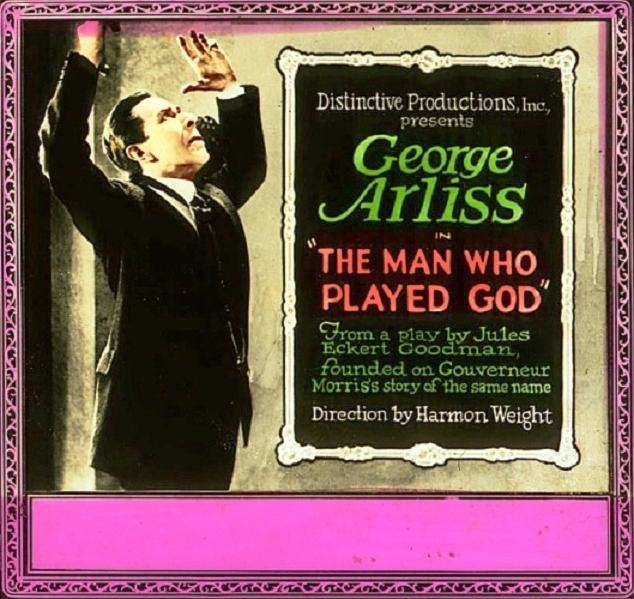
Director's Spotlight: United States
A Deep Dive into the 1922 Vision of F. Harmon Weight
Under the meticulous guidance of F. Harmon Weight, The Man Who Played God became the cultural zeitgeist captured so perfectly by F. Harmon Weight in 1922. Driven by an uncompromising commitment to Drama excellence, it remains a vital reference point for anyone studying the evolution of F. Harmon Weight.
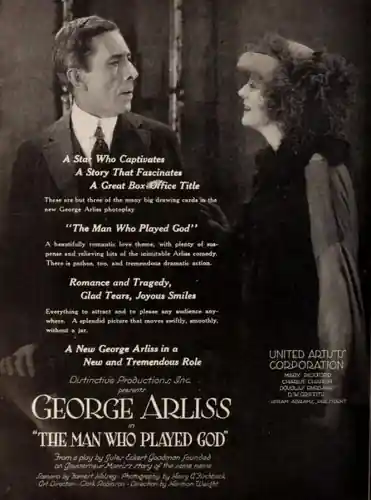
In The Man Who Played God, F. Harmon Weight pushes the boundaries of conventional narrative. The film's unique approach to its subject matter has sparked endless debates and interpretations among cinephiles and critics alike.
| Cinematography | High-Contrast |
| Soundtrack | Diegetic |
| Editing | Rhythmic |
| Art Direction | Naturalist |
Visualizing the convergence of F. Harmon Weight's style and the core Drama narrative.
At the height of his success musician John Arden loses his hearing as the result of an explosion. His young wife's devotion is sorely tested by his melancholy and cynicism, but her sense of duty prevents Marjorie from leaving him for Philip Stevens. At the point of suicide, John discovers that other people have greater problems, and he turns to philanthropy. His hearing is restored after a fall, and John realizes his wife's loyalty.
Decades after its release, The Man Who Played God remains a vital piece of the cinematic puzzle. Its influence can be seen in countless modern works, solidifying F. Harmon Weight's status as a master of the craft in United States and beyond.