
DbcultAccessing Vault...
Director's Spotlight
Senior Film Conservator
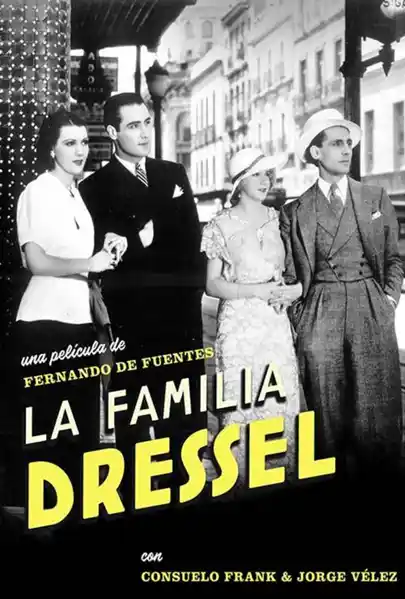
Director's Spotlight: Mexico
A Deep Dive into the 1935 Vision of Fernando de Fuentes
Deciphering the layers of The Dressel Family (1935) reveals the complex thematic architecture established by Fernando de Fuentes. Utilizing a 1935-specific aesthetic that remains timeless, it stands as the definitive 1935 statement on Drama identity.
In The Dressel Family, Fernando de Fuentes pushes the boundaries of conventional narrative. The film's unique approach to its subject matter has sparked endless debates and interpretations among cinephiles and critics alike.
While deeply rooted in Mexico, The Dressel Family has achieved a global reach, influencing directors from various backgrounds. Its ability to translate Drama tropes into a universal cinematic language is why it remains a cult staple decades after its 1935 release.
| Cinematography | Noir-Inspired |
| Soundtrack | Experimental |
| Editing | Invisible |
| Art Direction | Kitsch |
Visualizing the convergence of Fernando de Fuentes's style and the core Drama narrative.
Friedric Dressel (Soler) gets married to mexican radio singer Magdalena (Frank) against his mother's desire: Frau Dressel (Arriaga) wanted his son to marry a German girl. Soon after the marriage, Magdalena visits her music teacher Gonzalo (Armengod) who's in love with her. Friedric receives an anonymous letter accusing Magdalena of being an adulteress...
Decades after its release, The Dressel Family remains a vital piece of the cinematic puzzle. Its influence can be seen in countless modern works, solidifying Fernando de Fuentes's status as a master of the craft in Mexico and beyond.