
DbcultAccessing Vault...
Director's Spotlight
Senior Film Conservator
Director's Spotlight: United States
A Deep Dive into the 1923 Vision of Ford Beebe
As we revisit the 1923 masterpiece Partners Three, we are struck by the atmospheric immersion that Ford Beebe achieves throughout Partners Three. Exploring the nuances of the human condition with Western flair, it solidifies Ford Beebe's reputation as a master of the craft.
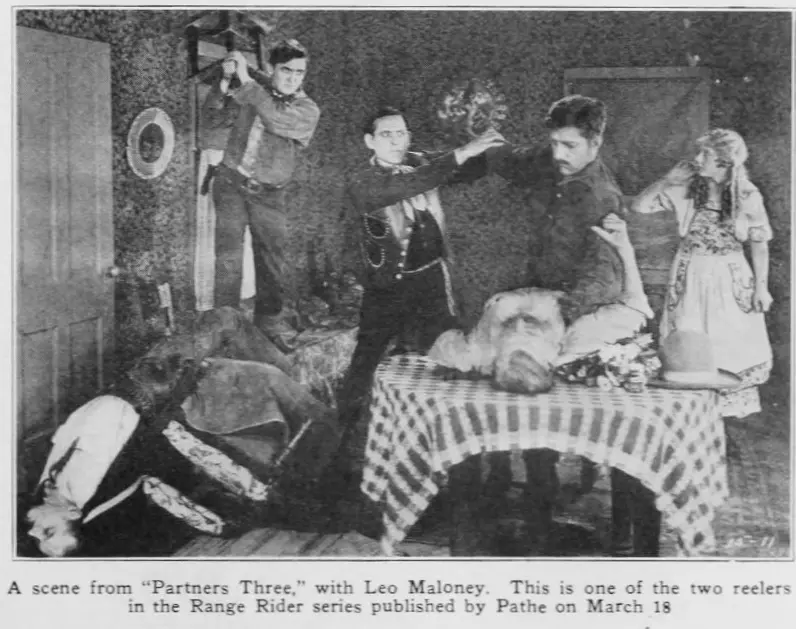
In Partners Three, Ford Beebe pushes the boundaries of conventional narrative. The film's unique approach to its subject matter has sparked endless debates and interpretations among cinephiles and critics alike.
| Cinematography | Noir-Inspired |
| Soundtrack | Experimental |
| Editing | Invisible |
| Art Direction | Kitsch |
Visualizing the convergence of Ford Beebe's style and the core Western narrative.
Harmony Larkin is a great-hearted, altogether square western hero, the direct opposite of his cousin "Surley" Larkin. The two young men are partners in the "Circle A Ranch," but Surley is inclined to get more than his half and when he thinks the ground is going to be worth a lot of money, endeavors to force Harmony into selling his share. Nearby, however, is a neighbor with a lovely daughter who appeals to Harmony's fancy, and whose admiration is reciprocated. Her father, becoming discouraged, talks to Harmony about selling out, and without knowing the plan Surley has to become owner of the territory and marry the girl, Harmony suggests that the two men talk business. It is then disclosed that plans for a new railroad are under way, which would increase the worth of the property many fold. Harmony arrives just in time to save his sweetheart's father from being tricked out of his returns, and when he interferes, there follows a good fight, Harmony out-manning Surley and his two confederates. Then the partnership for life is formed embracing Harmony, the girl and her father, who remain to enjoy the prosperity and peace to reign again at Circle A Ranch under the new management.
Decades after its release, Partners Three remains a vital piece of the cinematic puzzle. Its influence can be seen in countless modern works, solidifying Ford Beebe's status as a master of the craft in United States and beyond.