
DbcultAccessing Vault...
Director's Spotlight
Senior Film Conservator
Director's Spotlight: United States
A Deep Dive into the 1923 Vision of Ford Beebe
As a cultural artifact of the 1923s, The Extra Seven provides the visionary mind of its creator, Ford Beebe. With its avant-garde structure and atmospheric tension, it redefined what audiences could expect from a Drama experience.
In The Extra Seven, Ford Beebe pushes the boundaries of conventional narrative. The film's unique approach to its subject matter has sparked endless debates and interpretations among cinephiles and critics alike.
In this work, Ford Beebe explores the intersection of Drama and United States cultural identity. The meticulous attention to detail suggests a deep-seated commitment to pushing the boundaries of the medium, ensuring that The Extra Seven remains a relevant topic of study for Drama enthusiasts.
| Cinematography | Noir-Inspired |
| Soundtrack | Synth-Heavy |
| Editing | Disjunctive |
| Art Direction | Baroque |
Visualizing the convergence of Ford Beebe's style and the core Drama narrative.
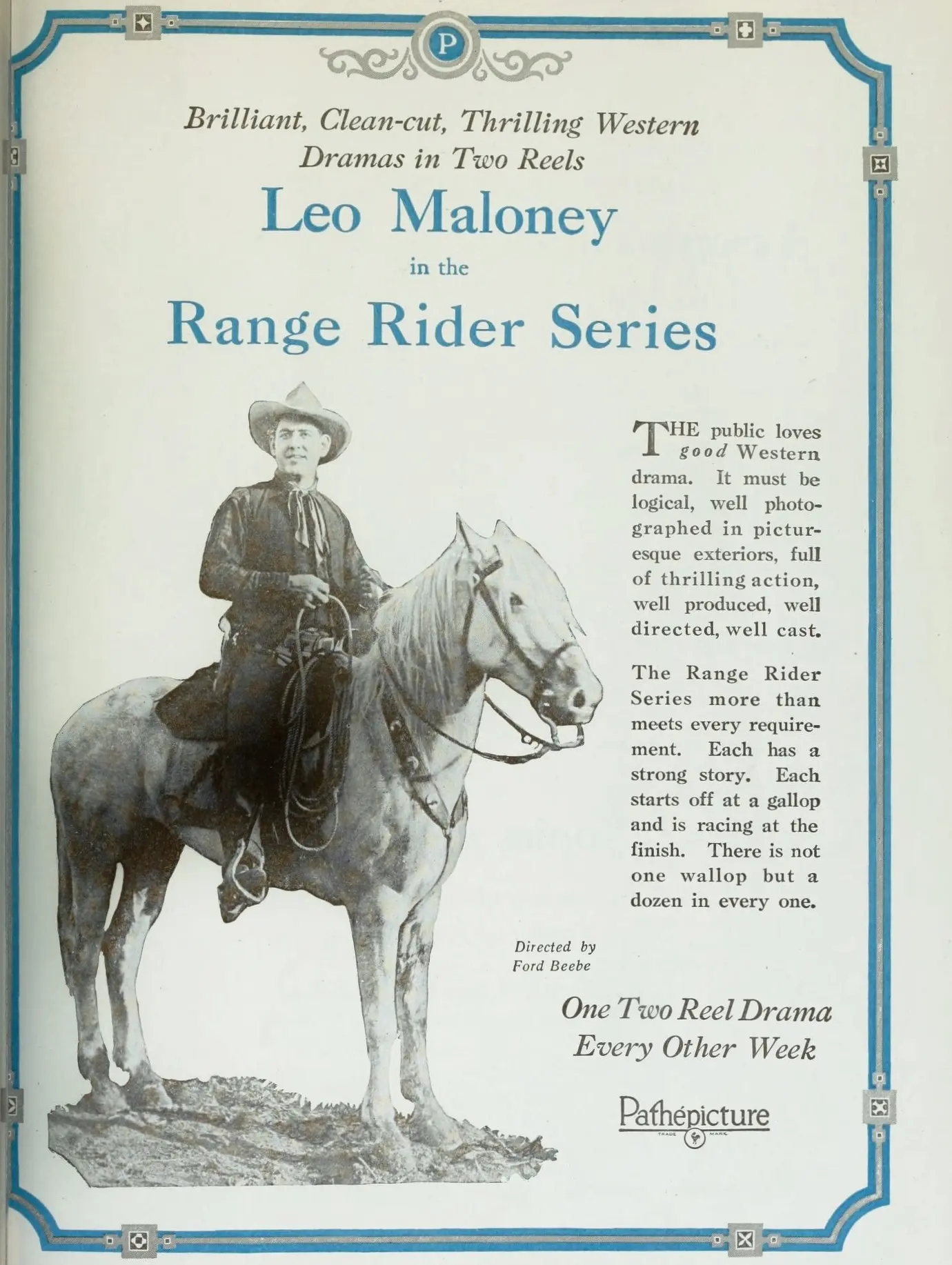
Leo is suitor for the hand of Polly, daughter of mother Martin who owns Double D Ranch where the "puncher" is employed. There is also a brother, with a gambling habit, whose welfare the prospective brother-in-law takes seriously. He watches a game from a bunk and sees a card shark (Bud Osborne) fill a poker hand by drawing an extra card to make a "straight flush" from his pistol pouch. But that shows up two sevens of the same suit. When it comes to cashing the chips, there ensues a fight, in the midst of which Polly appears and mistakes her fiancé's part in the argument, whereupon she accuses him of encouraging her brother's gambling habit. There follows another fight in which the brother is seemingly killed and the partners in the game plan to throw the guilt upon the innocent puncher. Rapid and interesting action develops, embracing some hard riding by all and quick thinking on the part of Polly. However, she learns the truth about the situation in time to stop a proposed lynching and identifies the guilty ones by most convincing evidence.
Decades after its release, The Extra Seven remains a vital piece of the cinematic puzzle. Its influence can be seen in countless modern works, solidifying Ford Beebe's status as a master of the craft in United States and beyond.