
DbcultAccessing Vault...
Director's Spotlight
Senior Film Conservator
Director's Spotlight: United States
A Deep Dive into the 1918 Vision of Frank Borzage
The brilliance of The Shoes That Danced (1918) is inseparable from a monumental shift in cult filmmaking spearheaded by Frank Borzage. Occupying a unique space between cult and pure art, it serves as a blueprint for future generations of cult directors.
In The Shoes That Danced, Frank Borzage pushes the boundaries of conventional narrative. The film's unique approach to its subject matter has sparked endless debates and interpretations among cinephiles and critics alike.
While deeply rooted in United States, The Shoes That Danced has achieved a global reach, influencing directors from various backgrounds. Its ability to translate cult tropes into a universal cinematic language is why it remains a cult staple decades after its 1918 release.
| Cinematography | High-Contrast |
| Soundtrack | Orchestral |
| Editing | Invisible |
| Art Direction | Kitsch |
Visualizing the convergence of Frank Borzage's style and the core cult narrative.
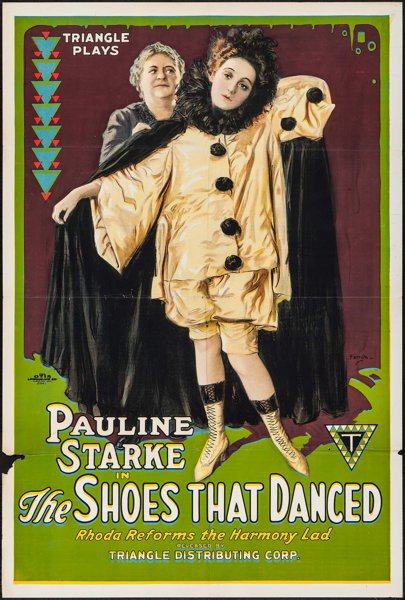
Shopgirl Rhoda Regan is in love with the Harmony Lad, the leader of a New York street gang called the Hudson Dusters. After two gang murders are committed in the Pepper Box, a local cabaret, the Harmony Lad promises his worried sweetheart that he will abandon the gang for a singing career, and true to his word, he soon accepts a job on the Pepper Box stage. When Stumpy Darcy, the new leader of the Dusters, kills rival gang leader Wedge Barker, who had flirted with Stumpy's girlfriend, Mamie Conlon, the Harmony Lad flees to New Jersey to escape police interrogation. In order to throw the police off the track while her lover escapes, Rhoda dances all night long with Stumpy, who has come to a masked ball dressed as Charlie Chaplin. Stumpy follows Rhoda home, where the police, imagining him to be the Harmony Lad, arrest him. His name cleared, the Harmony Lad marries Rhoda and embarks on a promising career in vaudeville.
Decades after its release, The Shoes That Danced remains a vital piece of the cinematic puzzle. Its influence can be seen in countless modern works, solidifying Frank Borzage's status as a master of the craft in United States and beyond.