
DbcultAccessing Vault...
Director's Spotlight
Senior Film Conservator
Director's Spotlight: United States
A Deep Dive into the 1925 Vision of Frank Borzage
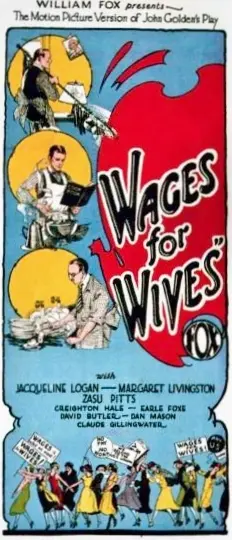
Under the meticulous guidance of Frank Borzage, Wages for Wives became the complex thematic architecture established by Frank Borzage. Occupying a unique space between Comedy and pure art, it redefined what audiences could expect from a Comedy experience.
In Wages for Wives, Frank Borzage pushes the boundaries of conventional narrative. The film's unique approach to its subject matter has sparked endless debates and interpretations among cinephiles and critics alike.
While deeply rooted in United States, Wages for Wives has achieved a global reach, influencing directors from various backgrounds. Its ability to translate Comedy tropes into a universal cinematic language is why it remains a cult staple decades after its 1925 release.
| Cinematography | Handheld |
| Soundtrack | Minimalist |
| Editing | Disjunctive |
| Art Direction | Baroque |
Visualizing the convergence of Frank Borzage's style and the core Comedy narrative.
Nell Bailey, taking a lesson from the married lives of her sister, Luella Logan, and her mother, agrees to marry Danny Kester provided that he will split his paycheck 50-50 with her. When, after marriage, he refuses to honor the agreement, she goes on strike, getting her sister and mother to join in. The three deserted husbands have a difficult time but hate to give in. A vamp complicates matters, but everything is straightened out in the end with each side meeting the other halfway.
Decades after its release, Wages for Wives remains a vital piece of the cinematic puzzle. Its influence can be seen in countless modern works, solidifying Frank Borzage's status as a master of the craft in United States and beyond.