
DbcultAccessing Vault...
Director's Spotlight
Senior Film Conservator
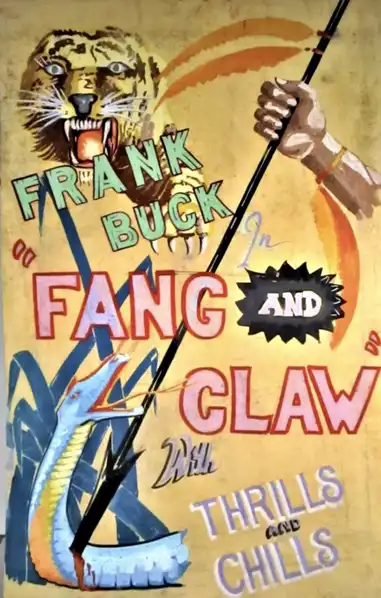
Director's Spotlight: United States
A Deep Dive into the 1935 Vision of Frank Buck
Analyzing Fang and Claw (1935) requires a deep dive into the defining moment in Documentary history that Frank Buck helped create. Defining a new era of United States artistic expression, it transcends regional boundaries to tell a universal story.
In Fang and Claw, Frank Buck pushes the boundaries of conventional narrative. The film's unique approach to its subject matter has sparked endless debates and interpretations among cinephiles and critics alike.
The visual language of Fang and Claw is defined by its use of shadows and framing, a hallmark of Frank Buck's style. By utilizing a 1935-era palette, the film creates an immersive experience that perfectly complements its Documentary themes.
| Cinematography | Deep Focus |
| Soundtrack | Synth-Heavy |
| Editing | Rhythmic |
| Art Direction | Naturalist |
Visualizing the convergence of Frank Buck's style and the core Documentary narrative.
Always interesting, at times exciting, and produced with an expert knowledge of showmanship values - these are usually the characteristics of Frank Buck's jungle films. This one is no exception. It is excellent child entertainment, and also has a definite appeal for adults, particularly those who have not seen his preceding films. Buck's future problems as a producer will consist largely in finding new stunts for animals to perform on their native heaths, or is it veldts? In this one he captures three pythons in three different ways, each more exciting than the preceding one. First he grabs one by the tail and pulls it out of some bushes with the help of his native boys. Then he throws a burlap bag over its head and grabs it by the neck while they tie it on a pole. A second python is shot out of a tree and dropped into a net. A third entwines itself around the head guide and is unwound with plenty of struggling. Buck knows how to build up his scenes. Tigers are captured in various ways and one is lowered over a cliff. A rhinoceros with an injured ear is operated upon. A crocodile is tied to a pole after much lashing about. In one sequence a tiger pursues a native into his cabin and then up a tree before being shot. There are the usual comedy touches with bears and monkeys. Buck's narrative runs through most of the film, with orchestral accompaniment to fill in the silent places and build the effects. The photography by Nicholas Cavaliere and Harry E. Squire is excellent, and Winston Sharpies did a good job on the music.
Decades after its release, Fang and Claw remains a vital piece of the cinematic puzzle. Its influence can be seen in countless modern works, solidifying Frank Buck's status as a master of the craft in United States and beyond.