
DbcultAccessing Vault...
Director's Spotlight
Senior Film Conservator
Director's Spotlight: United States
A Deep Dive into the 1919 Vision of Frank Hall Crane
The evocative power of Miss Crusoe stems from the unique collaboration between the subversive storytelling techniques employed by Frank Hall Crane in 1919. Synthesizing the best elements of United States and international cinema, it reminds us of the fragility and beauty of the 1919s.
In Miss Crusoe, Frank Hall Crane pushes the boundaries of conventional narrative. The film's unique approach to its subject matter has sparked endless debates and interpretations among cinephiles and critics alike.
The visual language of Miss Crusoe is defined by its use of shadows and framing, a hallmark of Frank Hall Crane's style. By utilizing a 1919-era palette, the film creates an immersive experience that perfectly complements its cult themes.
| Cinematography | Noir-Inspired |
| Soundtrack | Diegetic |
| Editing | Elliptical |
| Art Direction | Expressionist |
Visualizing the convergence of Frank Hall Crane's style and the core cult narrative.
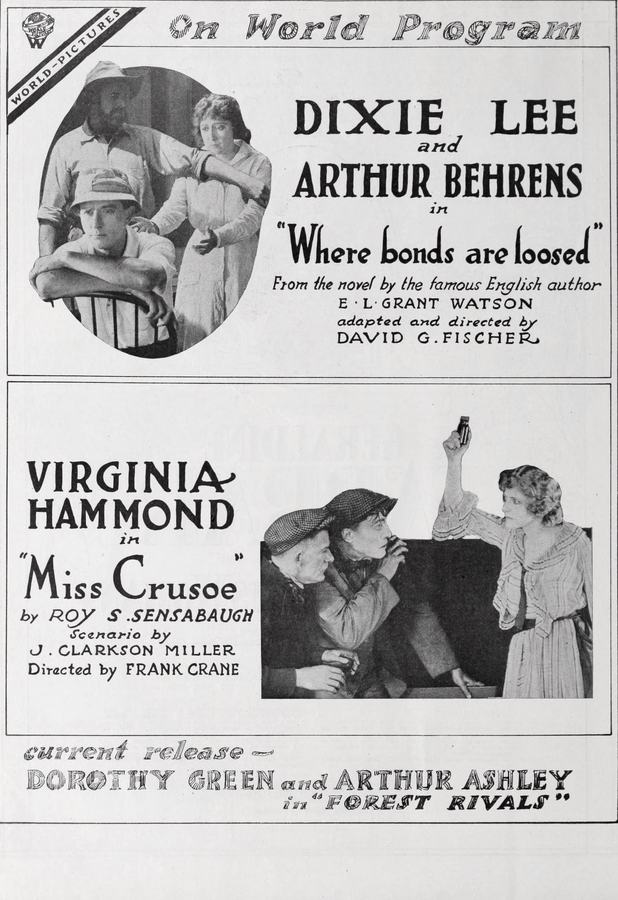
Dorothy Evans, a chemistry teacher at her aunt's girls school, hopes to satisfy her yearning for adventure when she vacations with her aunt, who desires to wear men's clothes, at a secluded island in the Chesapeake Bay. On the boat, they witness officers shooting an escaping prisoner diving overboard. On the island, a gang of crooks vacate the cottage belonging to Dorothy and her aunt, but leave behind a bottle of nitroglycerin. Dorothy recognizes it, and after dumping the contents into the bay, she fills it with her aunt's heart medicine. After the prisoner is taken in by the crooks and volunteers to get the "soup," Dorothy surprises him with a revolver and binds him to a chair. They fall in love, and when the gang tries to rescue him, he fights them. Dorothy's threat to drop the nitro bottle leads to the gang's capture. After the officers identify their "prisoner" as a famous detective Harold Vance, Dorothy and Harold plan to marry.
Decades after its release, Miss Crusoe remains a vital piece of the cinematic puzzle. Its influence can be seen in countless modern works, solidifying Frank Hall Crane's status as a master of the craft in United States and beyond.