
DbcultAccessing Vault...
Director's Spotlight
Senior Film Conservator
Director's Spotlight: United States
A Deep Dive into the 1915 Vision of Frank Hall Crane
The enduring fascination with Old Dutch is a testament to the artistic risks taken by Frank Hall Crane that eventually paid off. Challenging the viewer to find meaning in the cult shadows, it reminds us of the fragility and beauty of the 1915s.
In Old Dutch, Frank Hall Crane pushes the boundaries of conventional narrative. The film's unique approach to its subject matter has sparked endless debates and interpretations among cinephiles and critics alike.
In this work, Frank Hall Crane explores the intersection of cult and United States cultural identity. The meticulous attention to detail suggests a deep-seated commitment to pushing the boundaries of the medium, ensuring that Old Dutch remains a relevant topic of study for cult enthusiasts.
| Cinematography | Noir-Inspired |
| Soundtrack | Experimental |
| Editing | Elliptical |
| Art Direction | Expressionist |
Visualizing the convergence of Frank Hall Crane's style and the core cult narrative.
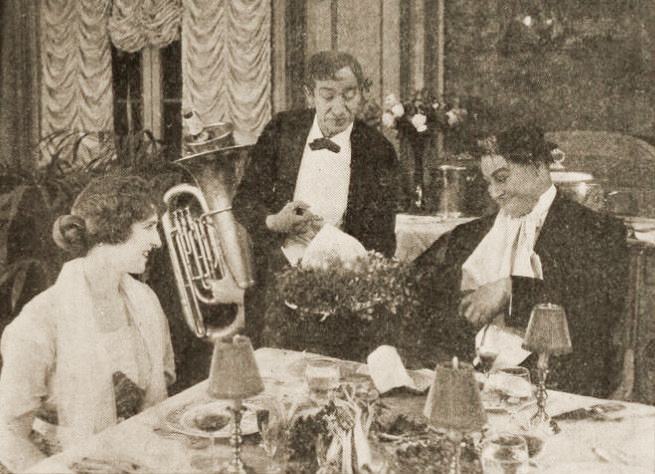
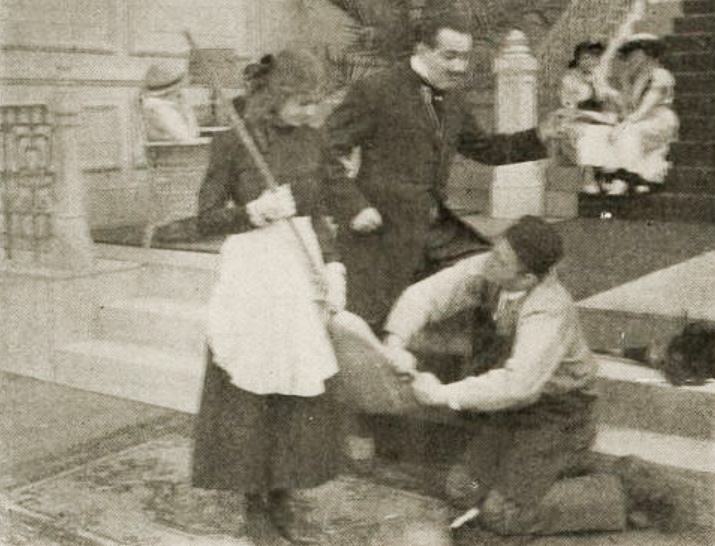
Ludwig "Old Dutch" Streusand and his daughter Violet live in New York, and after years of hard study and labor Old Dutch completes his invention: the "teloptophone," a device which, when attached to a telephone, enables the speaker to see the party at the other end of the wire. He goes to John Rockmorgan with his invention and after he proves its worth, Rockmorgan agrees to finance his invention and gives him a check for $5,000 on account. Old Dutch and Violet have had a hard time life; now that his invention is a success, he feels that they deserve a Palm Beach vacation. To escape the publicity arising through the invention of the teloptophone, he also thinks it wise to assume another name to avoid being questioned and annoyed about his invention. He arrives at a Palm Beach hotel and registers under the name of John Mueller and daughter, and settles down to a period of rest and comfort. Harold, John Rockmorgan's son, has also gone to the hotel, and when he sees Violet, love awakens in his heart. They meet and she is happy in her first love affair. In the meantime, the vaudeville team of Bings and Bings is discharged from the theater in which they are playing because their act is so bad. They are in desperate straits and the male member of the team has the idea to go to a fashionable Florida hotel and somehow get hold of some of the millionaires' money. Old Dutch has become a great favorite with the children of the hotel, and on the day that Bings and Bings arrive there, he loses his pocketbook while playing with the kids. Mr. Bings has the good luck to spot it, and before they register he goes through the contents and sees the $5,000 check made out to Ludwig Streusand. When he finds that no such man is stopping there, he boldly signs the name of Ludwig Streusand and daughter. When Joubert, the hotel proprietor, learns that such an illustrious person is stopping with him, he immediately begins to give receptions and balls in his honor. Old Dutch is so wrapped up in having a good time that he is unaware a man is masquerading under his name, so when his week's bill is presented he is unable to pay it, as his check for $5,000 and all means of identification have gone with the pocketbook. Joubert is furious that Old Dutch cannot pay his bill and tells him that he and his daughter must either go to jail or work off their board bill, Old Dutch protests and says that his name is Streusand and John Rockmorgan is his partner. Joubert laughs at him and points at whom he thinks is the real Streusand. Harold tells the proprietor he feels sure that Old Dutch is speaking the truth. When Joubert asks him how long he has known him and in what way he can identify them, he is left without an answer. So they are put to work, Old Dutch in the stable and Violet in the kitchen. Meanwhile the vaudeville team of Bings and Bings are having the time of their lives. The female end of the sketch is doing her best to win Harold Rockmorgan, who still believes and loves Violet. After having been forced to perform various duties around the hotel, on the night of a banquet given in honor of the false Streusand, Joubert forces Old Dutch to be headwaiter. In the meantime Old Dutch has induced Harold to phone to his father to come down and identify his partner. At first he refuses, but Harold gets the teloptophone from Old Dutch and tells his father that he plainly sees the stenographer seated on his lap and unless he does come at once he will tell mother. That settles the old man. During the banquet Bings is called upon for a speech, and as he is telling his eager listeners what a wonderful man he is, Rockmorgan arrives downstairs in the hotel. The clerk hastens to tell Joubert. Old Dutch overhears the good news, and knows that his time has come. He tears down to the office, followed by Bings and the surprised guests. He runs up to Rockmorgan who quickly explains that Old Dutch is the real Streusand and the other is a faker. Bings and Bings' day is over, Harold and Violet are free to get married, and Old Dutch takes up his pleasure again.
Decades after its release, Old Dutch remains a vital piece of the cinematic puzzle. Its influence can be seen in countless modern works, solidifying Frank Hall Crane's status as a master of the craft in United States and beyond.