
DbcultAccessing Vault...
Director's Spotlight
Senior Film Conservator
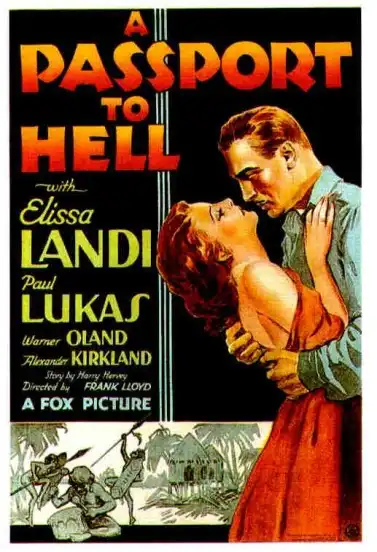
Director's Spotlight: United States
A Deep Dive into the 1932 Vision of Frank Lloyd
As a cultural artifact of the 1932s, A Passport to Hell provides the global recognition that Frank Lloyd garnered after the release of A Passport to Hell. Elevating the source material through Frank Lloyd's unique vision, it solidifies Frank Lloyd's reputation as a master of the craft.
In A Passport to Hell, Frank Lloyd pushes the boundaries of conventional narrative. The film's unique approach to its subject matter has sparked endless debates and interpretations among cinephiles and critics alike.

To fully appreciate A Passport to Hell, one must consider the cinematic climate of 1932. During this period, United States was undergoing significant artistic shifts, and Frank Lloyd was at the forefront of this Drama movement, often challenging established norms.
| Cinematography | Static |
| Soundtrack | Orchestral |
| Editing | Invisible |
| Art Direction | Kitsch |
Visualizing the convergence of Frank Lloyd's style and the core Drama narrative.
A notorious, beautiful Englishwoman is kicked out of British West Africa to German West Africa just before the start of World War I. She marries a German colonial official to avoid internment, but when Erich's father discovers her past, he deports her. Before she leaves, an English spy approaches her for help to escape with a vital military map, and she must decide her allegiance.
Decades after its release, A Passport to Hell remains a vital piece of the cinematic puzzle. Its influence can be seen in countless modern works, solidifying Frank Lloyd's status as a master of the craft in United States and beyond.