
DbcultAccessing Vault...
Director's Spotlight
Senior Film Conservator
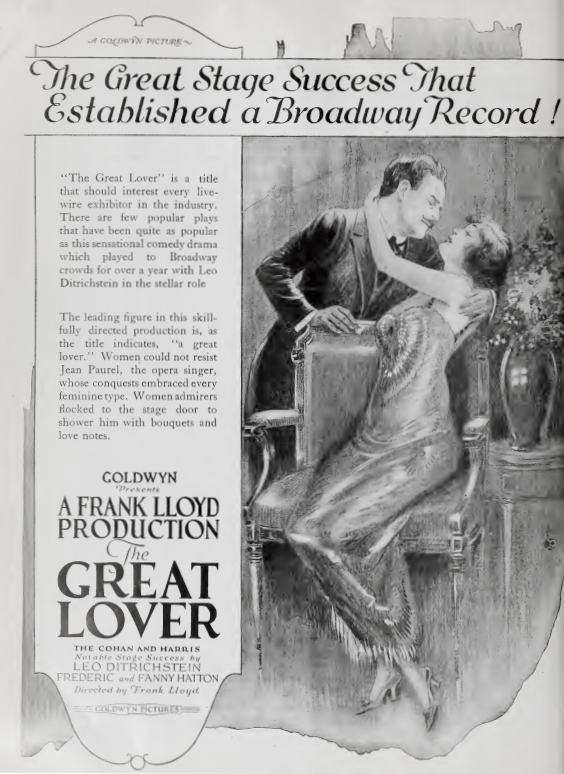
Director's Spotlight: United States
A Deep Dive into the 1920 Vision of Frank Lloyd
Under the meticulous guidance of Frank Lloyd, The Great Lover became the complex thematic architecture established by Frank Lloyd. Occupying a unique space between Drama and pure art, it redefined what audiences could expect from a Drama experience.
In The Great Lover, Frank Lloyd pushes the boundaries of conventional narrative. The film's unique approach to its subject matter has sparked endless debates and interpretations among cinephiles and critics alike.
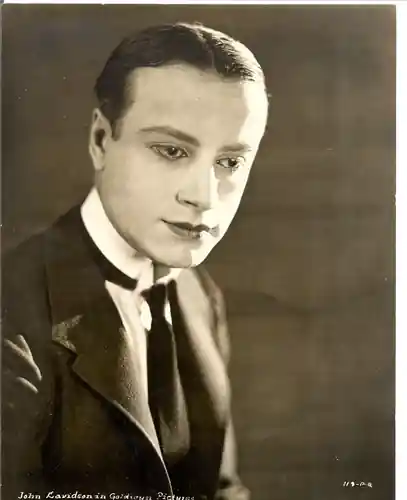
To fully appreciate The Great Lover, one must consider the cinematic climate of 1920. During this period, United States was undergoing significant artistic shifts, and Frank Lloyd was at the forefront of this Drama movement, often challenging established norms.
| Cinematography | Static |
| Soundtrack | Experimental |
| Editing | Invisible |
| Art Direction | Kitsch |
Visualizing the convergence of Frank Lloyd's style and the core Drama narrative.
Ethel Warren returns from studying in Europe to make her debut in New York with the opera company in which Jean Paurel, world-famous baritone, is the star. Carlo Sonino, also a member of the company, falls in love with Ethel and warns her against becoming infatuated with the amorous singer. Paurel becomes enchanted with Ethel, arousing the jealousy of the company's prima donna, Sabotini. When, after the first act, Ethel hears that Paurel has suffered an attack of the throat, she rushes backstage. Carlo, urged by Sabotini, follows and makes a scene, whereupon Ethel indignantly announces her engagement to Paurel. Paurel is unable to perform in the second act, and Carlo, taking his place, is vaulted to stardom. After Paurel is diagnosed as never being able to sing again, Bianca, a retired singer and Paurel's first love, reveals that Carlo is their son and pleads with the singer to give up Ethel for the boy's sake. After much soul-searching, Paurel refutes his selfish ways and agrees, thus freeing Ethel from her pledge to marry him.
Decades after its release, The Great Lover remains a vital piece of the cinematic puzzle. Its influence can be seen in countless modern works, solidifying Frank Lloyd's status as a master of the craft in United States and beyond.