
DbcultAccessing Vault...
Director's Spotlight
Senior Film Conservator
Director's Spotlight: United States
A Deep Dive into the 1915 Vision of Frank McGlynn Sr.
Under the meticulous guidance of Frank McGlynn Sr., The Truth About Helen became the complex thematic architecture established by Frank McGlynn Sr.. Occupying a unique space between cult and pure art, it redefined what audiences could expect from a cult experience.
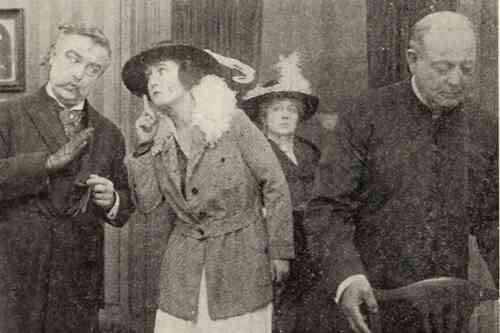
In The Truth About Helen, Frank McGlynn Sr. pushes the boundaries of conventional narrative. The film's unique approach to its subject matter has sparked endless debates and interpretations among cinephiles and critics alike.
| Cinematography | Deep Focus |
| Soundtrack | Experimental |
| Editing | Invisible |
| Art Direction | Kitsch |
Visualizing the convergence of Frank McGlynn Sr.'s style and the core cult narrative.
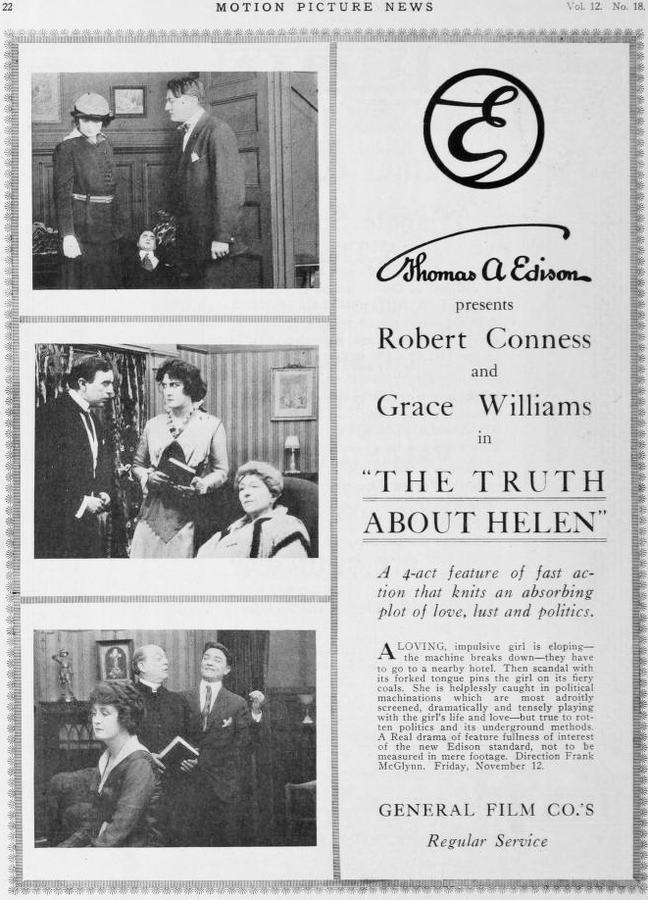
Helen Moore and Raoul Kent, nephew of Senator Foote, plan to elope. Raoul's machine breaks down on the road, and they go to a suburban hotel until morning. At the hotel, the "Boss" is holding a conference to decide upon the candidate for the office of district attorney. Hugh Graham, the Boss' choice, and once betrothed to Helen, enters the hotel to attend the conference. Passing the parlor, he hears Helen's scream. Raoul is making ugly advances to her, but Hugh breaks down the door, and beats Raoul for his viciousness. As Hugh emerges from the room with Helen to take her home, Gregory, defeated by Hugh for the candidateship, spies them. He draws his own conclusions from the scene. Helen, wrecked in health by her experiences, begs her father to take her away. He brings her to Washington to the home of his chum, Senator Foote, where she is to act as companion to Mrs. Foote. Hugh has, meanwhile, declined the nomination, under the threat from Gregory of exposure of the incident with Helen on the night of the Boss' conference. A year has passed and election time draws near again. Called on business to Washington, Hugh sees Helen, gorgeously gowned, at the theater with Senator Foote. Unconscious of the Senator's identity, he follows them home, for his suspicions have been aroused. Raoul, leading a life of dissipation, climbs into the window of the Senator's library, bent on a mission to steal some important papers. Hugh, seeing him, senses a robbery and follows him into the house. In the struggle, Raoul is killed. Helen and the Senator rush into the room, and Hugh's suspicion of her seems to be confirmed. This time, Hugh accepts the nomination for Congress, and Gregory prepares to make public what he saw at the suburban hotel. He gives his story to the daily newspaper. The editor of the paper, anxious to ascertain the truth of Gregory's accusation, begins an investigation of the case. His efforts serve to clear up the entire story. Hugh discovers how Helen came to enter the Senator's household. Election day is over. Congressman Hugh Graham is making preparations to take up his duties at Washington, and foremost among these duties is the choosing of his home, so that he may spend his days at the Capitol, together with his wife, Helen Moore Graham.
Decades after its release, The Truth About Helen remains a vital piece of the cinematic puzzle. Its influence can be seen in countless modern works, solidifying Frank McGlynn Sr.'s status as a master of the craft in United States and beyond.