
DbcultAccessing Vault...
Director's Spotlight
Senior Film Conservator
Director's Spotlight: United Kingdom
A Deep Dive into the 1914 Vision of Frank R. Growcott
In the grand tapestry of cult cinema, Loves and Adventures in the Life of Shakespeare serves as a bridge between the bold experimentation that has become synonymous with Frank R. Growcott. Breaking the traditional rules of cult engagement, it highlights the importance of independent voices in United Kingdom.
In Loves and Adventures in the Life of Shakespeare, Frank R. Growcott pushes the boundaries of conventional narrative. The film's unique approach to its subject matter has sparked endless debates and interpretations among cinephiles and critics alike.
The visual language of Loves and Adventures in the Life of Shakespeare is defined by its use of shadows and framing, a hallmark of Frank R. Growcott's style. By utilizing a 1914-era palette, the film creates an immersive experience that perfectly complements its cult themes.
| Cinematography | Deep Focus |
| Soundtrack | Synth-Heavy |
| Editing | Rhythmic |
| Art Direction | Naturalist |
Visualizing the convergence of Frank R. Growcott's style and the core cult narrative.
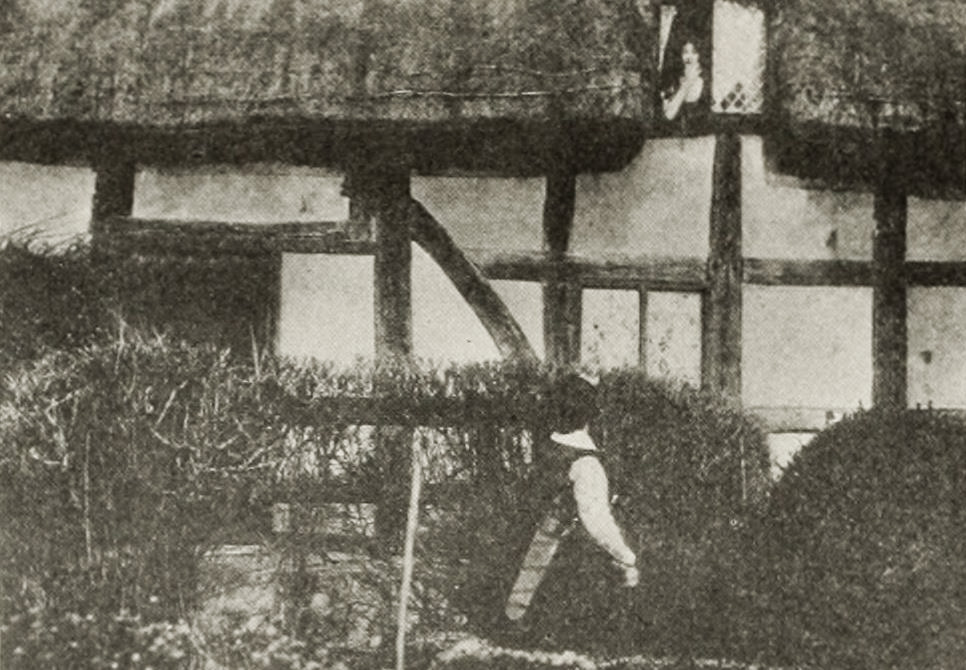
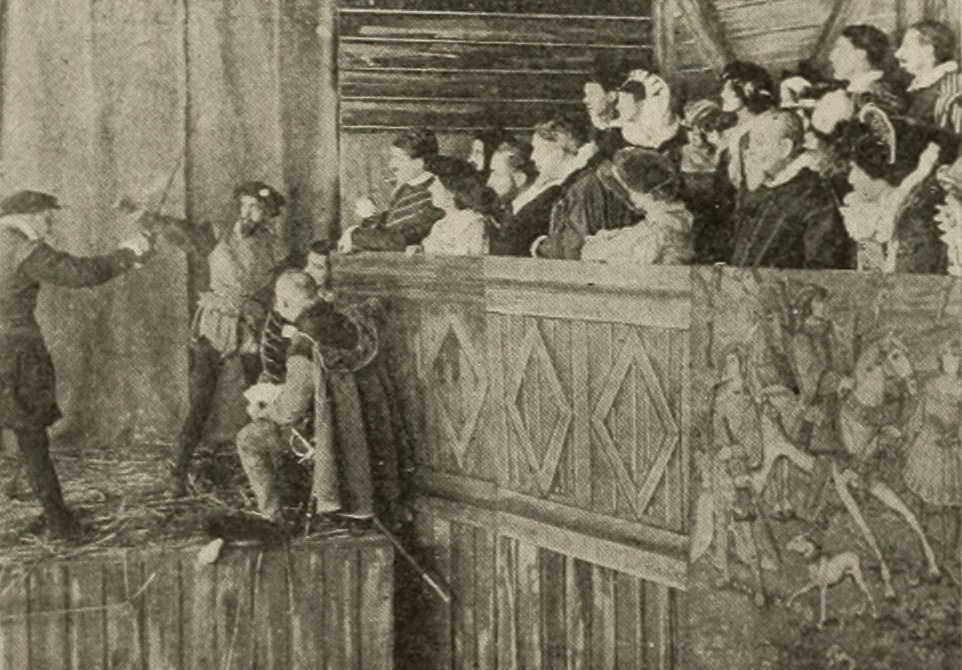
The romantic attachment which the humbly born William Shakespeare had for the beautiful and gentle Charlotte Clopton, of Clopton Hall, is authenticated by the letters of many people of the period, and as it is one of the most potent factors in the development of the genius of Shakespeare, it is very appropriate that the film should open with the first meeting of the future playwright and the beautiful young girl. This acquaintance always remained a romantic one, on the part of young Shakespeare, but Charlotte felt the attraction more seriously. Meanwhile, Sir Hugh Clopton, Charlotte's father, who is an ardent Catholic, shelters in his house a man named Carry, who is a traitor to the Queen; he does this at the command of Pope Gregory XIII, not knowing the character of the man he is harboring. Shakespeare, pursuing the apparently gay and thoughtless tenor of his career, but in reality training the great qualities of mind which were afterwards to make him famous, displeases a lawyer in whose employ he has been, and while he is trying to explain this to his mother, a tragic scene takes place, in the assassination of the traitor Parry. Too late. Sir Hugh Clopton learns of Parry's treachery, through Shakespeare's lawyer employer, who informs Sir Thomas Lucy of the plot, and also accuses Sir Hugh of being in it. Sir Hugh's celebration of his daughter's birthday is rudely interrupted by the arrival of soldiers, who are come to arrest him for complicity in the treasonous design. The Queen pardons Sir Hugh, but his lovely daughter falls ill of a mysterious malady, which is wrongly diagnosed as The Plague, but which is a fatal one, nevertheless despite the great danger of infection. Shakespeare bids her a passionate farewell before she dies. Some months later Shakespeare, now beginning to be the great man of his village, champions pretty, shy Anne Hathaway at the Twelfth Night Revels. Their acquaintance ripens, and their courtship is played out in the beautiful environs of Stratford and about the Anne Hathaway cottage. In sharp contrast to the idyllic Anne Hathaway of the courtship, the wedded wife of Shakespeare is undoubtedly the shrew, whose sharp tongue drives her husband to the distraction of the "Lucy Arms." This condition of things, added to the fact that Shakespeare has incurred the displeasure of Sir Thomas Lucy by his poaching exploits, drives the young man to leave home. He decides to try his fortunes in London, so takes leave of Anne and his child and starts away. In London, Shakespeare views the great crowds of richly dressed people with astonishment, but he soon wins friends. The theater, of course, draws him, and outside the historic old Globe Theater he looks upon the scene of his future triumphs. The genius of the young dramatist is soon discovered by the great Lord Southampton, who becomes his generous patron and introduces him to the court of Queen Elizabeth, where he meets Raleigh, Drake, the Earl of Essex, and all the famous political and social figures of the time. The command performance of "Romeo and Juliet" in the Blackfriars Theater which is attended by the Queen and all the Court, marks the beginning of that triumph which was, through the following year, to be the great crescendo of English literature. The final stages of the film show Shakespeare in the glow of middle age. He is dreaming of his past successes, scenes from his great plays visioning themselves before him. The film closes with the fading in and fading out of the bust of Shakespeare, which is in the Parish Church of Stratford-on-Avon.
Decades after its release, Loves and Adventures in the Life of Shakespeare remains a vital piece of the cinematic puzzle. Its influence can be seen in countless modern works, solidifying Frank R. Growcott's status as a master of the craft in United Kingdom and beyond.