Summary
In the hush before the quill caught fire, a glover’s son with ink-stained fingers beheld the alabaster Charlotte Clopton amid the mulberry scent of Clopton Hall—a first glance that cracked time like flawed glass. Their pulse-quickening rapport, chronicled in marginalia by velvet-sleeved gossips, flickers between courtly rapture and fatal disparity: he the dream-struck poetling, she the caged lark of recusant gentry. Beneath the same rafters, Sir Hugh secretes a papal emissary whose dagger plots against Gloriana; when the design unravels, steel flashes, blood spatters the birthday wafers, and crimson-coated soldiers drag the baronet through the yew-lined avenue. Charlotte, heartsick and branded by plague-suspicion, withers in a shuttered chamber where candle-smoke coils like incense over a premature requiem. Shakespeare, barred from the deathbed by contagion dread, presses a final kiss to the leaded pane, his breath ghosting the diamond glass as her pulse ebbs. Months thaw into Twelfth Night misrule: Anne Hathaway, timid as a hedgerow wren, accepts a masked player’s gallantry amid morris-bells and fire-leaping, only to discover wedlock a thorn-hedge of taunts, empty purses, and the squire’s vendetta for slaughtered stags. Fleeing conjugal clatter, the bardling trudges the rutted Thamesward road, trades Stratford’s mellow thatch for London’s timbered chaos, and—between bear-baiting roars and trumpet blasts—talks himself into the Curtain’s tiring-house. Patronage descends via Henry Wriothesley’s perfumed cuff; soon velvet-clad lords murmur at a cockfighting pit turned impromptu stage where star-crossed lovers expire in iambic throes. The sovereign, moon-faced behind stiff pearl-laden ruff, applauds; the groundlings stomp; the world tilts. Years compress into a single montage of laurels, quills, and tavern candle-grease until, silvered and weary, the playwright beholds his own memory as a lantern show: Lear’s storm, Cleopatra’s barge, Hamlet’s skull—phantoms dancing across the chancel wall where his effigy eventually will stare, alabaster once more, at centuries that refuse to keep still.
Synopsis
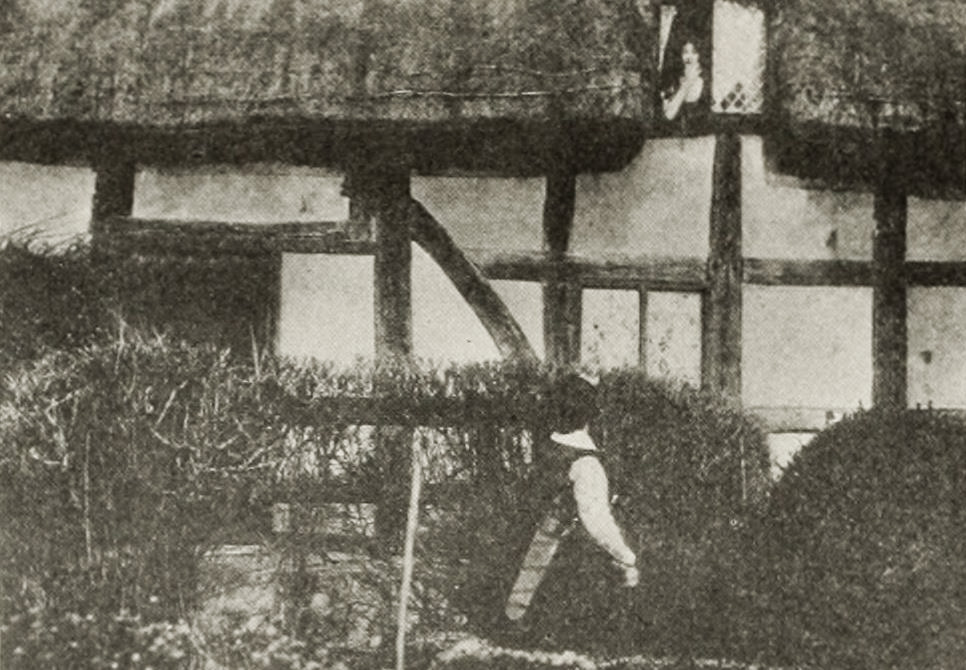
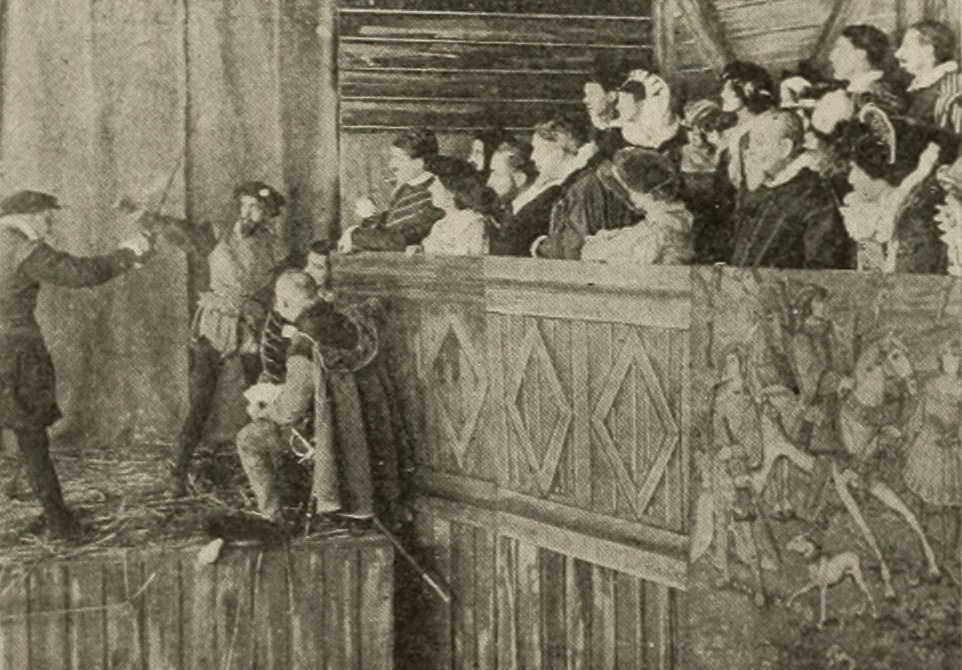
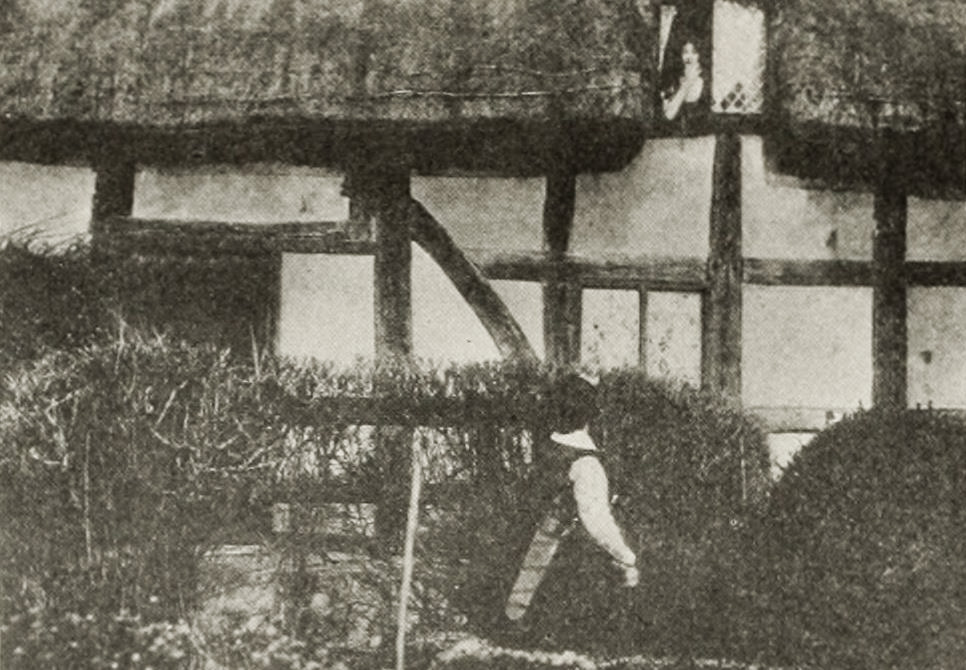
The romantic attachment which the humbly born William Shakespeare had for the beautiful and gentle Charlotte Clopton, of Clopton Hall, is authenticated by the letters of many people of the period, and as it is one of the most potent factors in the development of the genius of Shakespeare, it is very appropriate that the film should open with the first meeting of the future playwright and the beautiful young girl. This acquaintance always remained a romantic one, on the part of young Shakespeare, but Charlotte felt the attraction more seriously. Meanwhile, Sir Hugh Clopton, Charlotte's father, who is an ardent Catholic, shelters in his house a man named Carry, who is a traitor to the Queen; he does this at the command of Pope Gregory XIII, not knowing the character of the man he is harboring. Shakespeare, pursuing the apparently gay and thoughtless tenor of his career, but in reality training the great qualities of mind which were afterwards to make him famous, displeases a lawyer in whose employ he has been, and while he is trying to explain this to his mother, a tragic scene takes place, in the assassination of the traitor Parry. Too late. Sir Hugh Clopton learns of Parry's treachery, through Shakespeare's lawyer employer, who informs Sir Thomas Lucy of the plot, and also accuses Sir Hugh of being in it. Sir Hugh's celebration of his daughter's birthday is rudely interrupted by the arrival of soldiers, who are come to arrest him for complicity in the treasonous design. The Queen pardons Sir Hugh, but his lovely daughter falls ill of a mysterious malady, which is wrongly diagnosed as The Plague, but which is a fatal one, nevertheless despite the great danger of infection. Shakespeare bids her a passionate farewell before she dies. Some months later Shakespeare, now beginning to be the great man of his village, champions pretty, shy Anne Hathaway at the Twelfth Night Revels. Their acquaintance ripens, and their courtship is played out in the beautiful environs of Stratford and about the Anne Hathaway cottage. In sharp contrast to the idyllic Anne Hathaway of the courtship, the wedded wife of Shakespeare is undoubtedly the shrew, whose sharp tongue drives her husband to the distraction of the "Lucy Arms." This condition of things, added to the fact that Shakespeare has incurred the displeasure of Sir Thomas Lucy by his poaching exploits, drives the young man to leave home. He decides to try his fortunes in London, so takes leave of Anne and his child and starts away. In London, Shakespeare views the great crowds of richly dressed people with astonishment, but he soon wins friends. The theater, of course, draws him, and outside the historic old Globe Theater he looks upon the scene of his future triumphs. The genius of the young dramatist is soon discovered by the great Lord Southampton, who becomes his generous patron and introduces him to the court of Queen Elizabeth, where he meets Raleigh, Drake, the Earl of Essex, and all the famous political and social figures of the time. The command performance of "Romeo and Juliet" in the Blackfriars Theater which is attended by the Queen and all the Court, marks the beginning of that triumph which was, through the following year, to be the great crescendo of English literature. The final stages of the film show Shakespeare in the glow of middle age. He is dreaming of his past successes, scenes from his great plays visioning themselves before him. The film closes with the fading in and fading out of the bust of Shakespeare, which is in the Parish Church of Stratford-on-Avon.
Review Excerpt
"
A parchment tremor beneath the rose-and-thorn romance
Frank R. Growcott and society columnist Sidney Low, in scripting Loves and Adventures in the Life of Shakespeare, opted for the narrative equivalent of gilt-edged marbling: each anecdote swirled onto celluloid with the florid confidence of a Victorian valentine. The result is an anthology of near-myths stitched by gossamer threads—less historical document than fever dream in doublet and hose. Charlotte Clopton, an authentic Stratford name b..."