
DbcultAccessing Vault...
Director's Spotlight
Senior Film Conservator
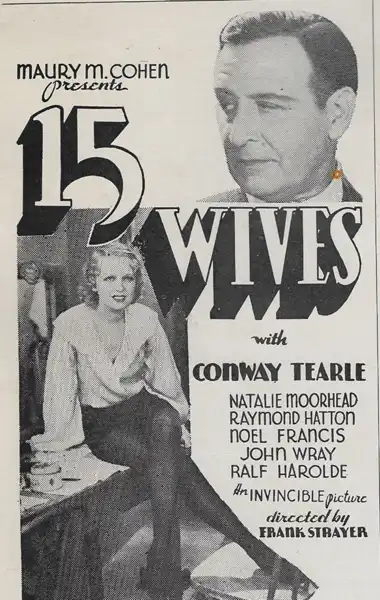
Director's Spotlight: United States
A Deep Dive into the 1934 Vision of Frank R. Strayer
The enduring fascination with Fifteen Wives is a testament to the defining moment in Crime history that Frank R. Strayer helped create. This film stands as a masterclass in visual storytelling, it has cemented its place in the global cult cinema archive.
In Fifteen Wives, Frank R. Strayer pushes the boundaries of conventional narrative. The film's unique approach to its subject matter has sparked endless debates and interpretations among cinephiles and critics alike.
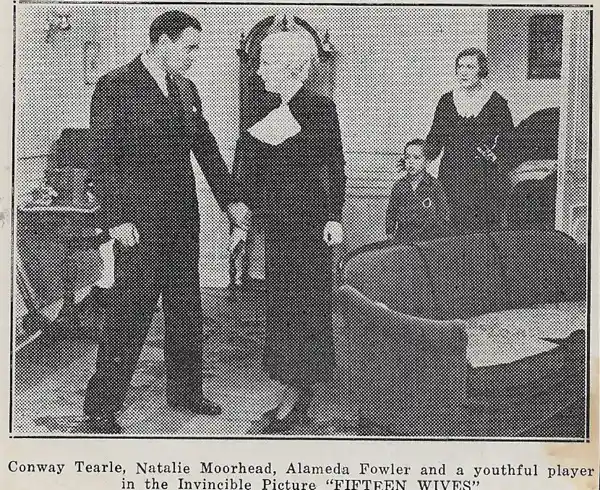
The visual language of Fifteen Wives is defined by its use of shadows and framing, a hallmark of Frank R. Strayer's style. By utilizing a 1934-era palette, the film creates an immersive experience that perfectly complements its Crime themes.
| Cinematography | High-Contrast |
| Soundtrack | Synth-Heavy |
| Editing | Disjunctive |
| Art Direction | Baroque |
Visualizing the convergence of Frank R. Strayer's style and the core Crime narrative.
Shortly after his arrival from South America to New York, Steven Humbolt is found dead in his apartment at the Savoia Hotel. Inspector Decker Dawes investigates the case and although the cause of death is described as apoplexy, Dawes is convinced it as murder, especially after he learns that Humbolt had been married fifteen times. The widows come from all over the world but three of them live in NYC; Sybilla Crum, a noted evangelist; Carol Manning, recently remarried to a man named Arnold; and Ruby Cotton. A detective is sent to Philadelphia to try to learn the identity of the sender of a box of flowers delivered to Humbolt's room before his death. Dawes calls on Carol Manning Arnold, who says she had married Humbolt five years ago, and that he had disappeared after stealing all her money and she was told he had died in South America. But he had recently shown up trying to blackmail her as she had not told Arnold of the marriage. The autopsy shows that Humbolt was killed by hydrocyanic acid gas and that the broken glass globe, found by Dawes, was a Helmholtz resonator, a well-known device that can be broken by sound-waves. Sybilla Crum goes to the district attorney to try to stop the investigation, while Dawes also learns that, unknown to her husband, Carol maintains an apartment in her maiden name. Dawes hears a radio program featuring The Electric Voice in which the latter demonstrates the power of sound waves emanating from his voice in breaking glasses, ringing bells and other feats. When the Voice emits a sound that is supposed to break glass, a Helmholtz resonator on Dawes' desk breaks.
Decades after its release, Fifteen Wives remains a vital piece of the cinematic puzzle. Its influence can be seen in countless modern works, solidifying Frank R. Strayer's status as a master of the craft in United States and beyond.