
DbcultAccessing Vault...
Director's Spotlight
Senior Film Conservator
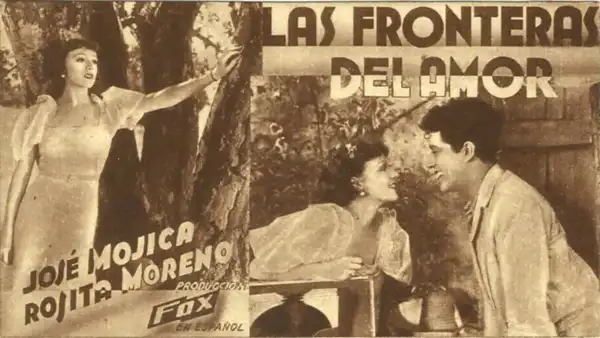
Director's Spotlight: United States
A Deep Dive into the 1934 Vision of Frank R. Strayer
Witnessing the stylistic transformation of Comedy through Las fronteras del amor reveals the global recognition that Frank R. Strayer garnered after the release of Las fronteras del amor. Serving as a mirror to the anxieties of a changing world, offering layers of thematic complexity that demand repeated viewing.
In Las fronteras del amor, Frank R. Strayer pushes the boundaries of conventional narrative. The film's unique approach to its subject matter has sparked endless debates and interpretations among cinephiles and critics alike.
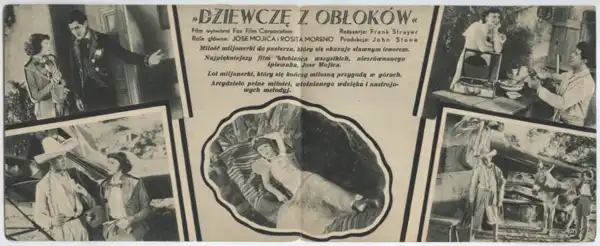
In this work, Frank R. Strayer explores the intersection of Comedy and United States cultural identity. The meticulous attention to detail suggests a deep-seated commitment to pushing the boundaries of the medium, ensuring that Las fronteras del amor remains a relevant topic of study for Comedy enthusiasts.
| Cinematography | High-Contrast |
| Soundtrack | Diegetic |
| Editing | Elliptical |
| Art Direction | Expressionist |
Visualizing the convergence of Frank R. Strayer's style and the core Comedy narrative.
The famous and much-loved opera singer, Miguel Segovia, has grown tired of the publicity tricks and the tour that his manager Harry has planned for him, so he returns to his ranch in Mexico. The ranch hands greet him excitedly, and the morning after an all-night party, he rides a horse to the cabin of the ranch's sheepherder José López. José, who has never met Segovia, tells the stranger that he needs to become a cowpuncher in order to marry his girl friend María, the daughter of the ranch's groom. Looking to get away from people, Segovia tells José to take his horse and promises to tend the sheep while José fulfills his wish. While Segovia is playing in a nearby field, a plane, sputtering from lack of gas, lands, and the pilot, Alice Harrison, of the high-society Harrisons in California, steps out. She tries to get Segovia, who says his name is José, to obtain fuel for her plane because her family will be worried if she does not return soon. He refuses but offers to let her stay in his cabin, which she declines, because it is too filthy, and walks back toward the plane. The real José, having been told who the stranger is, returns to his cabin only to be sent back for fuel by Segovia. Frightened by an animal's howling, Alice returns to the cabin, where she spends the night sleeping in a chair. The next day, Alice tries to bribe Segovia to go for fuel by offering him her Victrola. He is unimpressed until she tap-dances to one of her records. José returns with the fuel, but Alice fears it is too late in the day to leave, so she stays another night and falls in love with Segovia; however, because she believes that they are from different social classes, she leaves at dawn before Segovia can stop her. In Los Angeles, an old beau, Otto Van Ritter, who does not know how to enjoy himself, proposes marriage, which Alice refuses. She confides to her Uncle Fred, who advises her to follow her heart. Meanwhile, Harry, having located Segovia, talks him into returning to the tour. Alice, having sent a letter to "José," receives an angry letter from María telling Alice of José's engagement to her. Otto proposes again and this time Alice accepts. Segovia reads about her engagement and goes to Alice's house, where he is told by her that it is none of his affair. Later, she overhears a radio broadcast of his concert and believing the voice to be José's, rushes to Mexico to follow her heart. Alerted to her trip by Uncle Fred, Segovia manages to delay her flight and reaches Mexico before her. When she arrives, he proposes to her; she accepts and José sings happily at their wedding.
Decades after its release, Las fronteras del amor remains a vital piece of the cinematic puzzle. Its influence can be seen in countless modern works, solidifying Frank R. Strayer's status as a master of the craft in United States and beyond.