
DbcultAccessing Vault...
Director's Spotlight
Senior Film Conservator
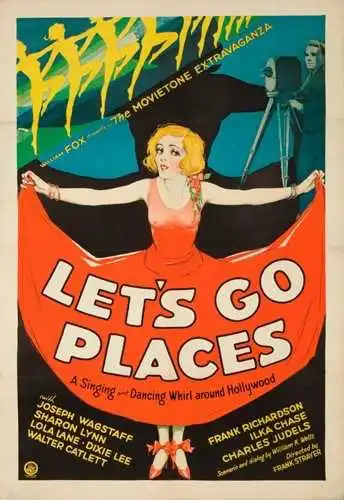
Director's Spotlight: United States
A Deep Dive into the 1930 Vision of Frank R. Strayer
The 1930 release of Let's Go Places marked a significant moment for the enduring legacy of Frank R. Strayer's artistic contribution to the genre. By challenging the status quo of 1930 cinema, it has cemented its place in the global cult cinema archive.
In Let's Go Places, Frank R. Strayer pushes the boundaries of conventional narrative. The film's unique approach to its subject matter has sparked endless debates and interpretations among cinephiles and critics alike.
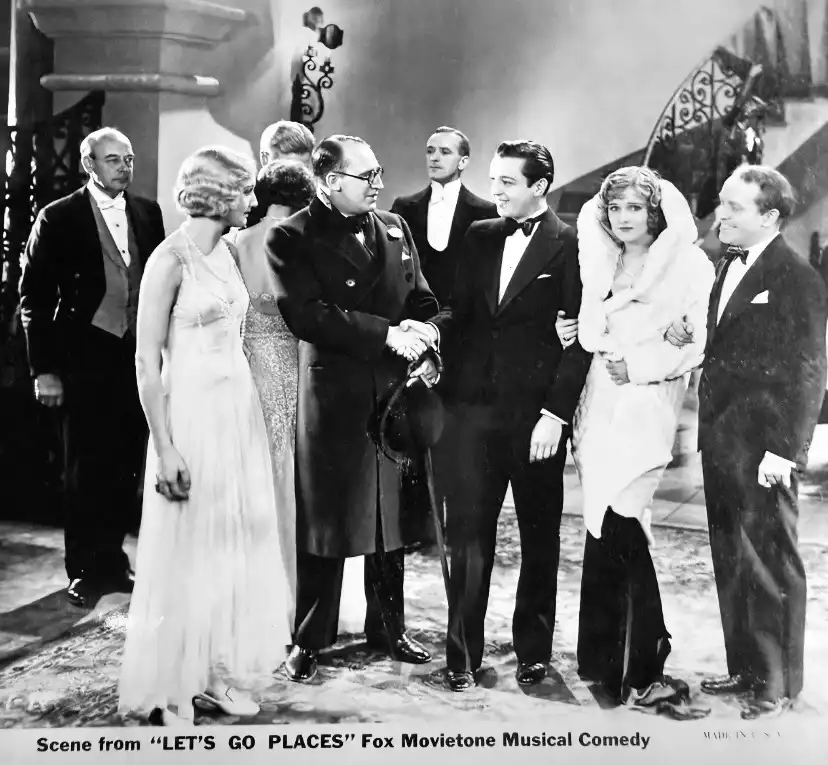
In this work, Frank R. Strayer explores the intersection of Musical and United States cultural identity. The meticulous attention to detail suggests a deep-seated commitment to pushing the boundaries of the medium, ensuring that Let's Go Places remains a relevant topic of study for Musical enthusiasts.
| Cinematography | Noir-Inspired |
| Soundtrack | Orchestral |
| Editing | Slow-Burn |
| Art Direction | Brutalist |
Visualizing the convergence of Frank R. Strayer's style and the core Musical narrative.
Paul Adams, a singer, assumes the name of operatic tenor Paul Du Bonnet and sets out for a career in Hollywood. En route to the coast, he meets Marjorie Lorraine, who falls in love with him, and in Hollywood he occupies the mansion of the famous singer. By the time Du Bonnet arrives, Paul has successfully launched a film career, though he has lost Marjorie because Du Bonnet's wife is claiming him, sight unseen. All is resolved, however, when Du Bonnet discovers Paul to be his long-lost nephew.
Decades after its release, Let's Go Places remains a vital piece of the cinematic puzzle. Its influence can be seen in countless modern works, solidifying Frank R. Strayer's status as a master of the craft in United States and beyond.