
DbcultAccessing Vault...
Director's Spotlight
Senior Film Conservator
Director's Spotlight: United States
A Deep Dive into the 1935 Vision of Frank R. Strayer
Witnessing the stylistic transformation of Drama through One in a Million reveals the provocative questions that Frank R. Strayer poses to the United States audience. Exploring the nuances of the human condition with Drama flair, it showcases the power of Drama as a tool for social commentary.
In One in a Million, Frank R. Strayer pushes the boundaries of conventional narrative. The film's unique approach to its subject matter has sparked endless debates and interpretations among cinephiles and critics alike.
The visual language of One in a Million is defined by its use of shadows and framing, a hallmark of Frank R. Strayer's style. By utilizing a 1935-era palette, the film creates an immersive experience that perfectly complements its Drama themes.
| Cinematography | Deep Focus |
| Soundtrack | Minimalist |
| Editing | Disjunctive |
| Art Direction | Baroque |
Visualizing the convergence of Frank R. Strayer's style and the core Drama narrative.
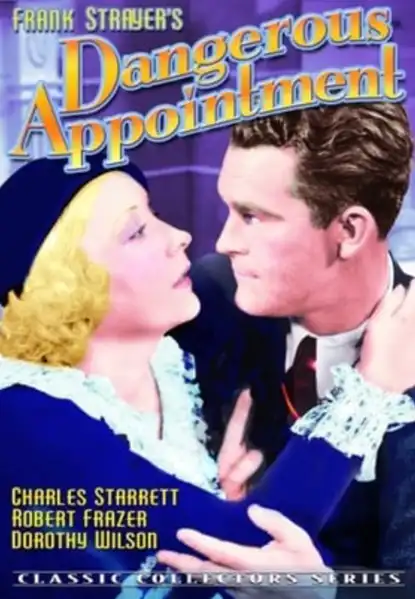
A typical mid-30s entry from the Maury M. Cohen Invincible arm of Chesterfield Pictures, shot in the usual static style of Frank R. Strayer who moved the camera maybe twice for a medium close-up, probably under orders not to from producer Cohen who knew moving the camera cost time and money. This one has good-girl Dorothy Brooks being summoned to the apartment of her department store boss, Mr. Dickman, who accuses her of stealing lingerie from the store, but if she will be nice and kiss him, he won't turn her in. She shoves him away and he tumbles (off-camera, of course) out of the second story window. Dorothy flees with the aid of her friend, Kitty Kennedy, and she soon encounters Donald Cabot, Jr. who, unknown to her, is the son of the department store owner. He, of course, also doesn't know she is an employee of his father's store wanted for assault and theft. No surprises from this point to the happy ending. Dickman, the cad, naturally turns out to be the lingerie thief.
Decades after its release, One in a Million remains a vital piece of the cinematic puzzle. Its influence can be seen in countless modern works, solidifying Frank R. Strayer's status as a master of the craft in United States and beyond.