
DbcultAccessing Vault...
Director's Spotlight
Senior Film Conservator
Director's Spotlight: United States
A Deep Dive into the 1920 Vision of Frank Reicher
The Drama DNA of Empty Arms is a reflection of United States's the subversive storytelling techniques employed by Frank Reicher in 1920. Breaking the traditional rules of Drama engagement, it leaves an indelible mark on the soul of the viewer.
In Empty Arms, Frank Reicher pushes the boundaries of conventional narrative. The film's unique approach to its subject matter has sparked endless debates and interpretations among cinephiles and critics alike.
While deeply rooted in United States, Empty Arms has achieved a global reach, influencing directors from various backgrounds. Its ability to translate Drama tropes into a universal cinematic language is why it remains a cult staple decades after its 1920 release.
| Cinematography | High-Contrast |
| Soundtrack | Minimalist |
| Editing | Slow-Burn |
| Art Direction | Brutalist |
Visualizing the convergence of Frank Reicher's style and the core Drama narrative.
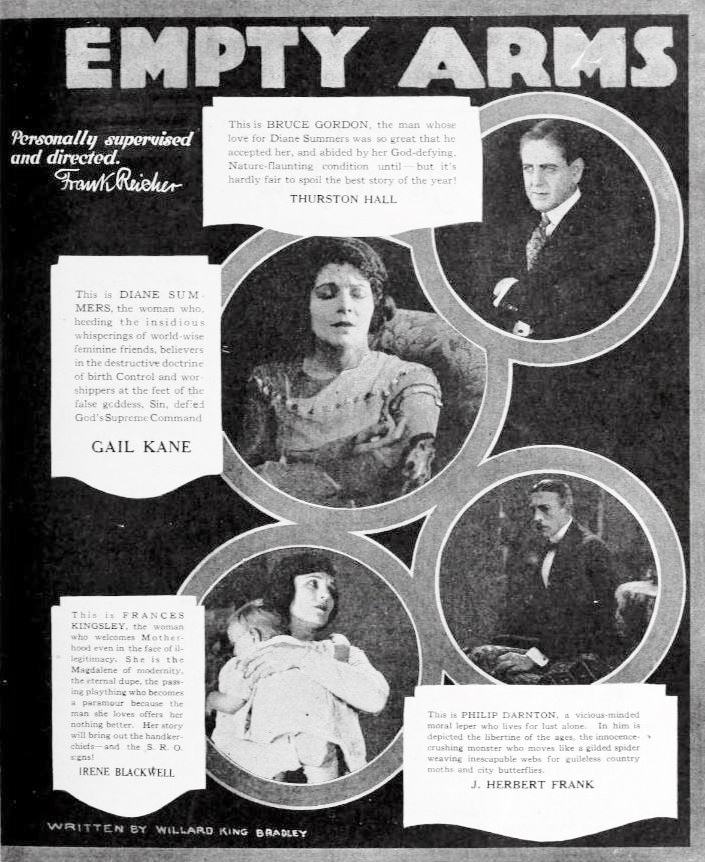
Diane Summers' mother died giving birth to her, and Diane has been terrified of the same thing happening to her if she becomes pregnant. When her boyfriend Bruce Gordon proposes to her, she agrees to marry him on one condition--that the marriage never be consummated so that she will never have children. Gordon agrees, but soon finds the situation unbearable and leaves her. Diane, seeing how happy other women are with their children, finally changes her mind about not having children of her own, and sets out to find her husband and inform him. However, the train she's on is derailed and she is "rescued" by Phillip Darnton, who has his own plans for Diane--and they don't include bringing her back to her husband.
Decades after its release, Empty Arms remains a vital piece of the cinematic puzzle. Its influence can be seen in countless modern works, solidifying Frank Reicher's status as a master of the craft in United States and beyond.