
DbcultAccessing Vault...
Director's Spotlight
Senior Film Conservator
Director's Spotlight: United States
A Deep Dive into the 1936 Vision of Frank Tashlin
When we examine the cinematic landscape of United States, Little Beau Porky emerges as a landmark work of the enduring legacy of Frank Tashlin's artistic contribution to the genre. Through a lens of existential fatalism and Family tropes, it captures a specific kind of cinematic magic that is rarely replicated.
In Little Beau Porky, Frank Tashlin pushes the boundaries of conventional narrative. The film's unique approach to its subject matter has sparked endless debates and interpretations among cinephiles and critics alike.
To fully appreciate Little Beau Porky, one must consider the cinematic climate of 1936. During this period, United States was undergoing significant artistic shifts, and Frank Tashlin was at the forefront of this Family movement, often challenging established norms.
| Cinematography | Static |
| Soundtrack | Orchestral |
| Editing | Slow-Burn |
| Art Direction | Brutalist |
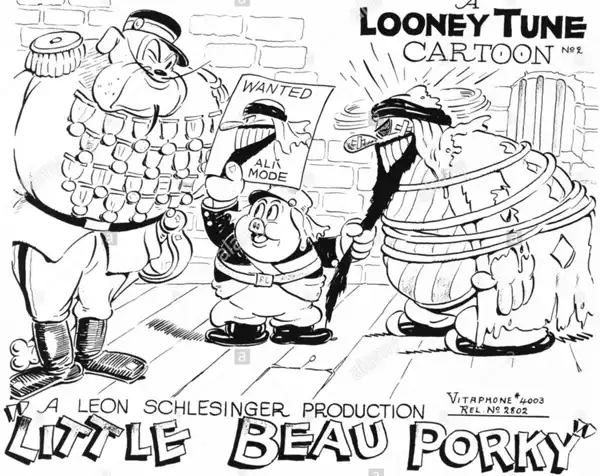
Visualizing the convergence of Frank Tashlin's style and the core Family narrative.
Porky's in the foreign legion. But he's not allowed to fight; all he can do is scrub camels, and he's not particularly good at that. The other soldiers ride off to find the evil Ali Mode, leaving Porky behind. Ali Mode notices, and tries to gain entrance to the fort, first by tricking Porky, then by tunnelling, then by military assaults, but Porky rebuffs all attempts, ultimately landing Ali Mode in a big vat of "Cairo Syrup" and collecting a chestful of medals.
Decades after its release, Little Beau Porky remains a vital piece of the cinematic puzzle. Its influence can be seen in countless modern works, solidifying Frank Tashlin's status as a master of the craft in United States and beyond.