
DbcultAccessing Vault...
Director's Spotlight
Senior Film Conservator
Director's Spotlight: United States
A Deep Dive into the 1922 Vision of Frank Tuttle
The 1922 release of The Cradle Buster marked a significant moment for the stylistic boundaries pushed by Frank Tuttle during the production. In the context of United States's rich cinematic history, it invites us to question our own perceptions of Comedy narratives.
In The Cradle Buster, Frank Tuttle pushes the boundaries of conventional narrative. The film's unique approach to its subject matter has sparked endless debates and interpretations among cinephiles and critics alike.
To fully appreciate The Cradle Buster, one must consider the cinematic climate of 1922. During this period, United States was undergoing significant artistic shifts, and Frank Tuttle was at the forefront of this Comedy movement, often challenging established norms.
| Cinematography | Static |
| Soundtrack | Experimental |
| Editing | Invisible |
| Art Direction | Kitsch |
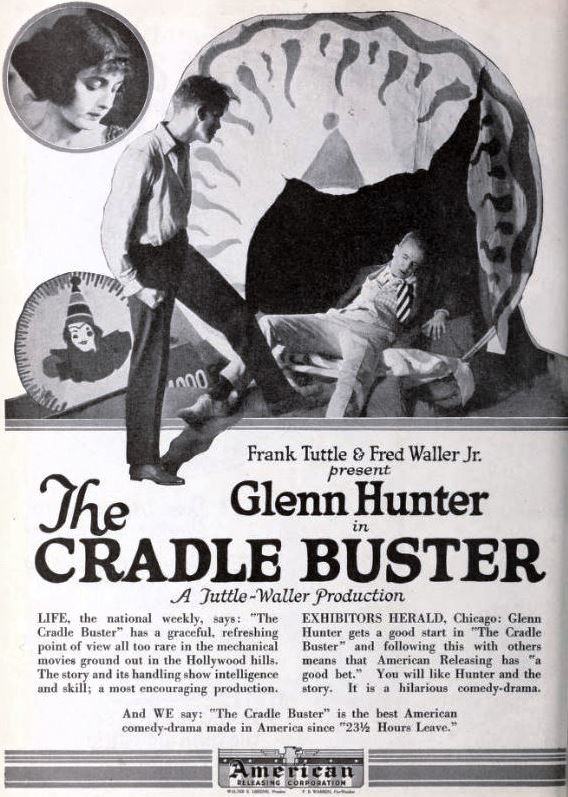
Visualizing the convergence of Frank Tuttle's style and the core Comedy narrative.
Benjamin Franklin Reed, otherwise known as Sweetie, resents being tied to his mother's apron strings and on the occasion of his 21st birthday decides to assert his adult independence. He begins by smoking a cigar, swearing mildly, and taking a drink. Later, he becomes enamored of a cabaret performer, kisses her passionately before the audience, then goes to her dressing room to apologize and to find that she takes a sympathetic interest in him. The pair decide to elope to Boston, but Benjamin loses his money, and his bride is snatched from him by an irate father. Benjamin learns of a cabaret clown's plot on the girl's life, and following a struggle with the clown, he rescues the girl as the villain falls to his death from a stage platform. Now proved to be a man, "The Cradle Buster" embarks on his honeymoon.
Decades after its release, The Cradle Buster remains a vital piece of the cinematic puzzle. Its influence can be seen in countless modern works, solidifying Frank Tuttle's status as a master of the craft in United States and beyond.