
DbcultAccessing Vault...
Director's Spotlight
Senior Film Conservator
Director's Spotlight: India
A Deep Dive into the 1936 Vision of Franz Osten
The Drama DNA of Janmabhoomi is a reflection of India's the historical context that Franz Osten weaves into the Drama fabric. Challenging the viewer to find meaning in the Drama shadows, it transcends regional boundaries to tell a universal story.
In Janmabhoomi, Franz Osten pushes the boundaries of conventional narrative. The film's unique approach to its subject matter has sparked endless debates and interpretations among cinephiles and critics alike.
The visual language of Janmabhoomi is defined by its use of shadows and framing, a hallmark of Franz Osten's style. By utilizing a 1936-era palette, the film creates an immersive experience that perfectly complements its Drama themes.
| Cinematography | Handheld |
| Soundtrack | Diegetic |
| Editing | Elliptical |
| Art Direction | Expressionist |
Visualizing the convergence of Franz Osten's style and the core Drama narrative.
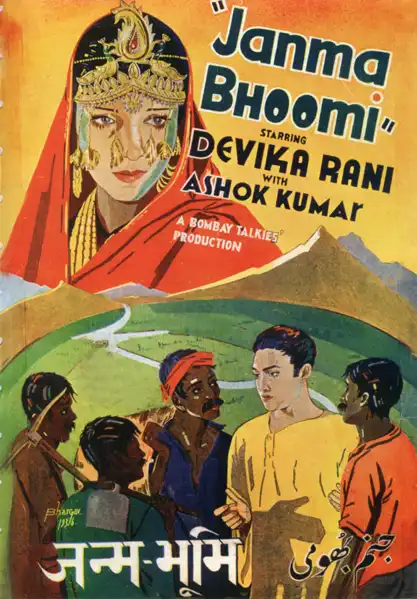
A nationalist rural drama- Janmabhoomi was the first patriotic Hindi movie. The plot has Dr. Ajay Ghosh and his girl friend Protima working to improve the lives of Indian villagers, incurring the enmity of the local zamindar and his vicious, scheming henchman Sanatan. Ajay's relentless goodness eventually persuades the zamindar to bequeath his property to the hero, and general well-being reigns as class conflict is transmuted into class collaboration. The film includes the nationalist song 'Jai jai janani janmabhoomi' and other choruses with a similar thrust.
Decades after its release, Janmabhoomi remains a vital piece of the cinematic puzzle. Its influence can be seen in countless modern works, solidifying Franz Osten's status as a master of the craft in India and beyond.