
DbcultAccessing Vault...
Director's Spotlight
Senior Film Conservator
Director's Spotlight: United States
A Deep Dive into the 1922 Vision of Fred Hibbard
In the grand tapestry of Short cinema, Horse Sense serves as a bridge between the bold experimentation that has become synonymous with Fred Hibbard. Breaking the traditional rules of Short engagement, it highlights the importance of independent voices in United States.
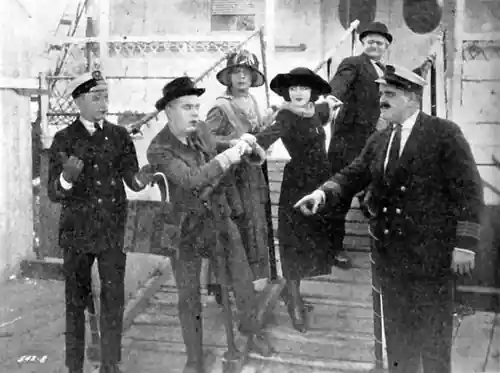
In Horse Sense, Fred Hibbard pushes the boundaries of conventional narrative. The film's unique approach to its subject matter has sparked endless debates and interpretations among cinephiles and critics alike.
| Cinematography | Handheld |
| Soundtrack | Synth-Heavy |
| Editing | Rhythmic |
| Art Direction | Naturalist |
Visualizing the convergence of Fred Hibbard's style and the core Short narrative.
Sally the horse wakes up Harry by throwing him out of bed. Harry insists on calling himself "Doug" and his girl "Mary." He takes a long time to get on the horse and then rides only to the next house. Here he and his girl do some stunts in imitation of Mary and Doug. The second half of this amusing comedy takes place on a large steamer. The girl's father insists on sending his daughter away but Harry follows. All efforts to prevent him from embarking prove of no avail. The captain, first mate and father of the girl all help to add to the comedy business and provoke laughter.
Decades after its release, Horse Sense remains a vital piece of the cinematic puzzle. Its influence can be seen in countless modern works, solidifying Fred Hibbard's status as a master of the craft in United States and beyond.