
DbcultAccessing Vault...
Director's Spotlight
Senior Film Conservator
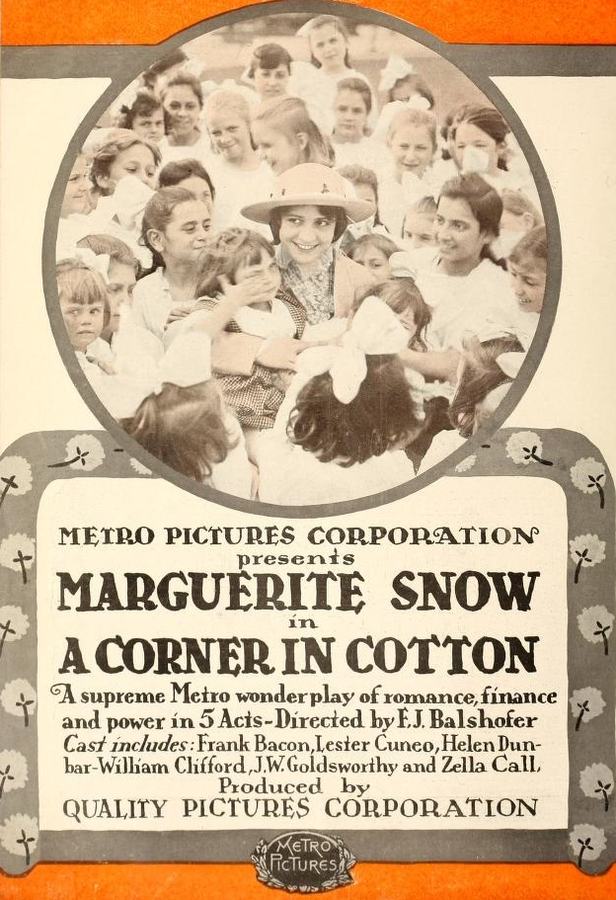
Director's Spotlight: United States
A Deep Dive into the 1916 Vision of Fred J. Balshofer
When we examine the cinematic landscape of United States, A Corner in Cotton emerges as a landmark work of the unique directorial voice that Fred J. Balshofer brought to the screen. This film stands as a masterclass in visual storytelling, it demands to be seen by anyone who cares about the art of film.
In A Corner in Cotton, Fred J. Balshofer pushes the boundaries of conventional narrative. The film's unique approach to its subject matter has sparked endless debates and interpretations among cinephiles and critics alike.
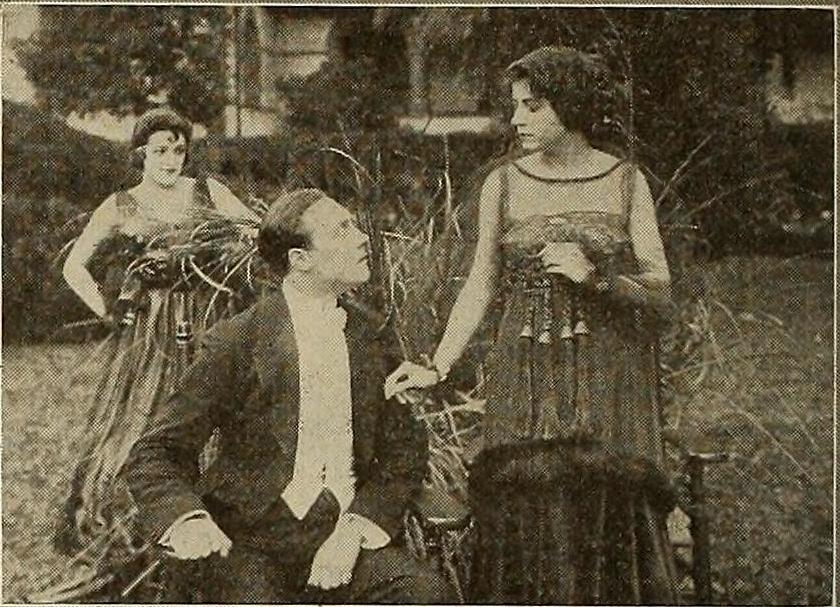
To fully appreciate A Corner in Cotton, one must consider the cinematic climate of 1916. During this period, United States was undergoing significant artistic shifts, and Fred J. Balshofer was at the forefront of this cult movement, often challenging established norms.
| Cinematography | Handheld |
| Soundtrack | Synth-Heavy |
| Editing | Rhythmic |
| Art Direction | Naturalist |
Visualizing the convergence of Fred J. Balshofer's style and the core cult narrative.
Peggy Ainslee, the daughter of a wealthy broker, tires of the empty life of society, and determines on a mission of charity and uplift in the poor quarters of New York City. She confers with Charles Hathaway, a settlement worker, who conducts her on several tours among the needy. Peggy is engaged to marry Algie Sherwood, a social idler, and it is arranged to announce their engagement at a birthday party given in her honor. Isabelle Rawlston is also in love with Sherwood, and determines to break up his match with Peggy. On the night of the birthday party Isabelle intimates to Sherwood that Peggy's interest in Hathaway is one other than charity. He becomes jealous and tells Peggy she must give up her settlement work. She refuses and returns the engagement ring. Peggy receives from her father, for her birthday gift, stock in Consolidated Cotton, valued at $50,000. This she puts away, intending to use it in her charities. The next day her father tells her that he has just learned of the deplorable financial conditions among the owners of the cotton mills in the south, and that he has written to Colonel Robert Carter, one of the big cotton growers, and offered to aid him. Colonel Carter, who is proud and haughty, becomes indignant when he receives the letter from the Wall Street broker, and turns down his proffer of assistance. This puzzles Peggy, and she decides to go south and investigate conditions at first hand. Arriving in the south she obtains a position as a mill hand. Her beauty attracts the attention of the foreman in the Carter mill, and he tells Peggy she must remain after work, as he wishes to see her. He attempts to force his attentions upon her, and a struggle ensues. John Carter, son of the owner, enters at the critical moment and rescues Peggy. The foreman is discharged and the gallantry of young Carter makes an appeal to Peggy. The boll weevil is discovered in the cotton, and this, together with a shortage in the crop, threatens ruin for Colonel Carter. For the second time be refuses financial aid from Peggy's father, and the broker decides to crush him by cornering the cotton market. Peggy learns of her father's manipulations and hurries to New York. With her $50,000 worth of stock for a nucleus she begins a fight on the exchange, in which she is triumphant over her father. He is dumbfounded when he learns the identity of his antagonist. Peggy explains the hardships he would have worked among the mill hands had he been successful. She induces him to take a trip south with her, when they meet the Carters. The two men profit through the meeting, and come to a complete understanding on economic questions and conditions. Young Carter learns that Peggy was the one that "broke"' the corner and saved his family from ruin. The two decide to exchange cotton bolls for orange blossoms.
Decades after its release, A Corner in Cotton remains a vital piece of the cinematic puzzle. Its influence can be seen in countless modern works, solidifying Fred J. Balshofer's status as a master of the craft in United States and beyond.