
DbcultAccessing Vault...
Director's Spotlight
Senior Film Conservator
Director's Spotlight: United States
A Deep Dive into the 1920 Vision of Fred J. Butler
Deciphering the layers of Girls Don't Gamble (1920) reveals the complex thematic architecture established by Fred J. Butler. Utilizing a 1920-specific aesthetic that remains timeless, it stands as the definitive 1920 statement on Comedy identity.
In Girls Don't Gamble, Fred J. Butler pushes the boundaries of conventional narrative. The film's unique approach to its subject matter has sparked endless debates and interpretations among cinephiles and critics alike.
While deeply rooted in United States, Girls Don't Gamble has achieved a global reach, influencing directors from various backgrounds. Its ability to translate Comedy tropes into a universal cinematic language is why it remains a cult staple decades after its 1920 release.
| Cinematography | Noir-Inspired |
| Soundtrack | Minimalist |
| Editing | Disjunctive |
| Art Direction | Baroque |
Visualizing the convergence of Fred J. Butler's style and the core Comedy narrative.
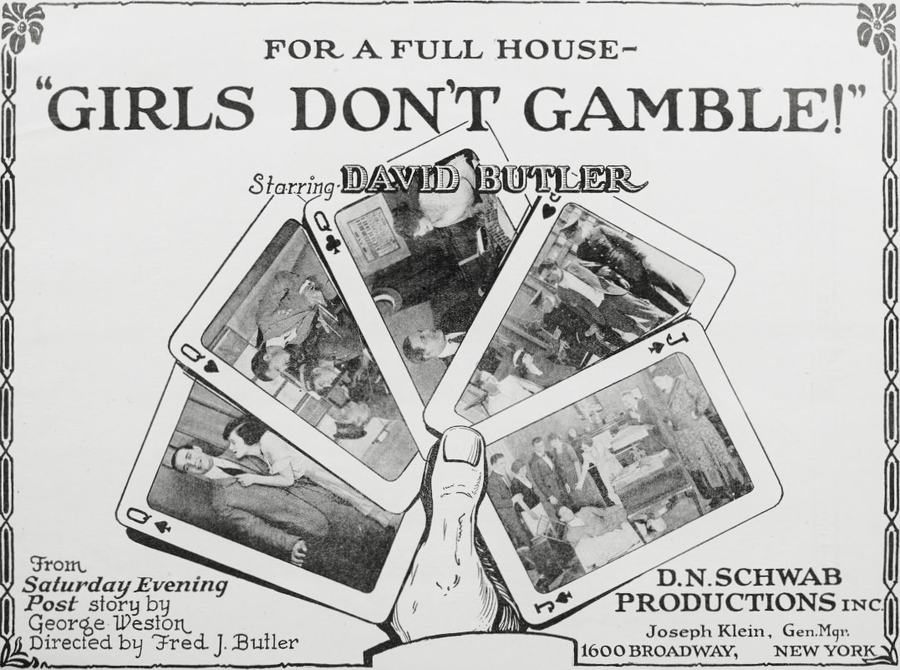
When James Fisher, a young farmer with an ambition to be a mechanic, smashes up the truck that he has purchased with his savings, he decides to leave the farm for the city. Once there, he finds a job driving a department store truck and one day, while on his rounds, he meets and falls in love with Madge Rathbone. Although Madge's father Wilbur approves of James, her sisters' boyfriends are appalled that she is dating a lowly truck driver. To break up the romance, they get James fired by framing him for thievery. After he saves his former employer from a robbery, however, James is awarded $10,000 with which he starts his own trucking business and marries Madge.
Decades after its release, Girls Don't Gamble remains a vital piece of the cinematic puzzle. Its influence can be seen in countless modern works, solidifying Fred J. Butler's status as a master of the craft in United States and beyond.