
DbcultAccessing Vault...
Director's Spotlight
Senior Film Conservator
Director's Spotlight: United States
A Deep Dive into the 1935 Vision of Friz Freleng
To understand the modern evolution of United States film, one must first look at Billboard Frolics and the collaborative alchemy between Friz Freleng and the 1935 creative team. Subverting the expectations of the typical 1935 audience, it remains a vital reference point for anyone studying the evolution of Friz Freleng.
In Billboard Frolics, Friz Freleng pushes the boundaries of conventional narrative. The film's unique approach to its subject matter has sparked endless debates and interpretations among cinephiles and critics alike.
To fully appreciate Billboard Frolics, one must consider the cinematic climate of 1935. During this period, United States was undergoing significant artistic shifts, and Friz Freleng was at the forefront of this Comedy movement, often challenging established norms.
| Cinematography | Static |
| Soundtrack | Orchestral |
| Editing | Slow-Burn |
| Art Direction | Brutalist |
Visualizing the convergence of Friz Freleng's style and the core Comedy narrative.
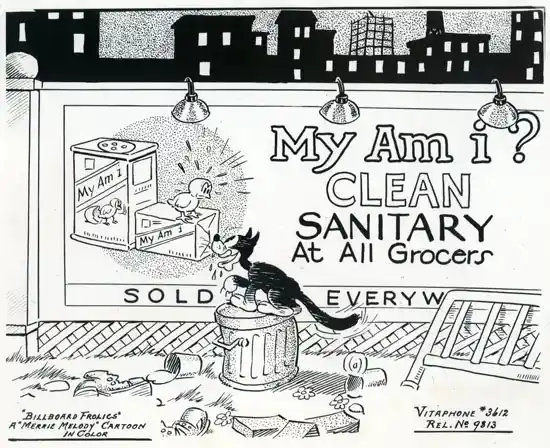
Billboards come to life. Eddie Camphor and his "wioleen" player Rub-Him-Off do a song and dance to "Merrily We Roll Along" with new lyrics. A dancer on a Cuban tourism poster does a dance. Pancho's Tamales sing in Spanish; the Old Maid cleanser girls dance. Some Russian Rye bread dances to a Russian arrangement. The penguins for Old Colds cigarettes dance and skate, too. Two union suits do a dance, with their drop panel beating time on washtubs, as a set of lingerie dances and a Jell-O mold shakes. The My Ami chick goes after the worm in an apple, but catches the hose of an air pump instead and gets inflated. A cat comes after the chick. The bellhop for Philmore cigarettes calls out the support: A Police Chief gasoline car, the RCA dog (fake brand not visible), and finally the arm and hammer from a baking soda poster which clubs the cat on the head.
Decades after its release, Billboard Frolics remains a vital piece of the cinematic puzzle. Its influence can be seen in countless modern works, solidifying Friz Freleng's status as a master of the craft in United States and beyond.